Headless CMS personalization: What you need to know
blogDetail.updated April 1, 2026


blogDetail.subscribeCard.title
blogDetail.subscribeCard.description
Most successful brands understand why they need to personalize digital content experiences. Personalization leads to better engagement, more conversions, and improved customer loyalty.
But in a marketing landscape packed with compelling content, personalization needs to go beyond simple “Welcome back” messages or lists of recommended products. True personalization is about tailoring every aspect of the content journey to the customer’s needs and preferences and creating a dynamic, real-time experience that is different for every individual, however and whenever they engage.
In fact, intelligently designed journeys are more than experiences; they’re revenue systems that evolve continually, enabling brands to learn, optimize, and power business growth.
Achieving that level of personalization isn’t easy, especially when content teams are working with slow, inflexible content management system (CMS) architecture that isn’t optimized for the kind of dynamic content creation and delivery that customers expect.
The good news is, in the age of the digital experience platform (DXP), we’re no longer limited by legacy CMSes because composability has opened up a new landscape of personalization possibilities, including dynamic, real-time personalization.
In this post, we’re going to discuss those possibilities. We will explain how composability and, more specifically, the headless CMS have changed the personalization landscape—and how that shift has shaped Contentful’s new era of component-level DXP personalization, in which every brand and every marketing team is empowered to create personalized content experiences with unprecedented speed and efficiency.
The problem with legacy personalization
The problem with legacy content personalization isn't a lack of creativity, customer data, or even content volume — it’s the limitations that certain types of CMS architecture place on the process.
That’s because legacy CMSes are monolithic in the sense that backend content administration is tightly coupled to frontend content presentation. Monolithic architecture makes it harder to make changes to content — including creating personalized variants — without disrupting underlying code, and slower to deliver personalized content to customers. Developers may be able to create bespoke workarounds for that problem, but doing so adds complexity and can end up hurting frontend performance.
Legacy CMSes are also (predominantly) optimized for page-based experiences, so when teams do change or update content to create a personalized variant, they usually need to duplicate the entire webpage, or replace it. Worse, they need to replicate the entire experience in every place that the content lives, across multiple channels — rather than simply leveraging the reusability that would be possible in a composable DXP (more on that below).
Those issues are a huge barrier to dynamic, real-time personalization, because they make it difficult (if not impossible) to shape the content experience in anything other than broad, page-level strokes.
That approach leads to:
Content sprawl because marketers have to build more new pages to meet their personalization objectives.
Brand fragmentation because marketers have to copy and paste personalized content assets manually between pages.
Developer dependency because marketers almost always need developer support whenever they want to adjust content experiences.
Ineffective testing because it’s difficult to isolate the content assets on a page that are working, and those that aren’t.
Vendor lock-in because legacy CMSes typically don’t allow third-party integrations — at least, not without developing complex workarounds.
Monolithic architecture undermines scalability; page-based personalization gets bogged down in workflow bottlenecks and technical complexity when it needs to be efficient, agile, and adaptive.
That sluggishness also affects content velocity because it lowers the pace at which content teams can create, test, and iterate the content experiences, increasing the need for manual intervention and specialized workarounds.
How a DXP changes the personalization game
The DXP changes that picture by making digital ecosystems composable, essentially freeing them from developer-imposed restrictions on the tech stack.
In that composable environment, brands are free to build bespoke stacks that serve their content strategies and business needs exactly, integrating apps and tools that increase the speed with which marketers can test their content, create new personalized experiences, and learn how to improve.
Headless CMS freedom
That flexibility includes the integration of a headless content management system. In a headless CMS, the backend technical administration of content is decoupled from the front end — the head — which determines the presentation of content.
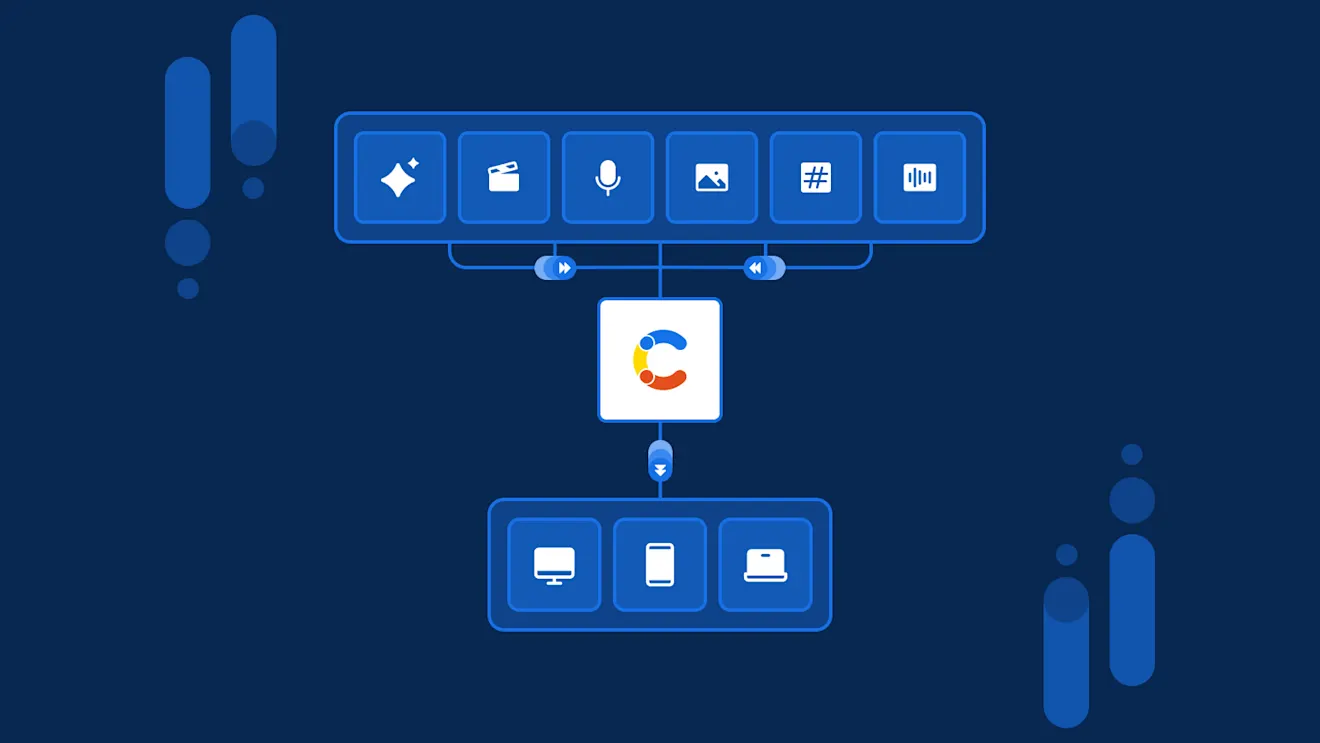
Frontend freedom — headlessness — means that content no longer has to be locked into and slowed down by page templates. It can be broken down into structural components; headers, body text, images, author bios, and so on. That component-level structuring unlocks potential: Now brands can draw content from a centralized database of modular parts, and assemble them like building blocks to create truly unique personalized experiences to suit individual customers.
Embedded within a DXP, a headless CMS can easily integrate other useful personalization tools for example, a customer data platform (CDP), or customer relationship management (CRM) tool, or anything that they feel will enhance the effectiveness of the personalization solution.
Personalization speed
The real difference that headlessness makes is to personalization speed because it enables brands to create and deploy personalized content faster than they would have by slogging away with page-based monolithic architecture.
That speed boost begins with data analysis and content creation, and extends to testing and experimentation, where brands can identify and deploy better personalized content variants faster than ever.
And headless speed can be cranked up further with automation. Brands can integrate an array of generative artificial intelligence (GenAI) tools to remove manual effort from personalization and take care of the small-detail decisioning that goes into personalization — that includes, AI-suggested audience segments, AI-suggested content experiment, and even AI-generated content variants determined by performance signals.
Headless personalization in action
Let’s examine headless personalization at a critical part of the customer journey: the call to action (CTA) button. In a headless and composable environment, the CTA isn’t locked into a static page; it’s an independent asset that can be modified.
It can also be tested, optimized, and refined for different audience segments. That means, instead of creating a few variations on the wording of the CTA and hoping they resonate with the relevant audience segments, content teams can run experiments quickly to test and verify specific wordings.
For example, if the team hypothesizes that first-time users will respond best to a “Get started” message, and returning users will respond to “Take another look,” then testing that is a matter of spinning up a test, within the DXP, and receiving hard data that reveals the most effective variant.
The value here isn’t just swapping text in the odd CTA to tweak performance, it’s the ability to continually test hypotheses, and push precisely personalized content to the right segments, on any touchpoint, at speed.
And marketers can exert that same control over every other content component on the page, or in their ecosystem to create truly unique experiences, and endlessly personalized journeys — collectively hitting the gas without adding to their content management burden.
Level-up personalization with Contentful
Here’s where Contentful stands out from the crowd. Built with a native personalization engine, the Contentful DXP combines legacy power and reliability with the flexibility, freedom, and speed of headless CMS architecture.
Modular content
In the Contentful Platform, content is already structured as modular building blocks — headers, text, images, CTAs, and so on — and stored in a centralized content hub. That means each asset only needs to be created once, and then can be reused anywhere.
This modular approach makes it easy to create personalized variants without duplicating content or compromising consistency or compatibility. Teams can tailor personalized experiences for different audiences quickly and easily, while maintaining a single source of truth that protects brand voice and messaging. Modular content can then be reused across multiple points of the customer journey, in ways that elevate the entire customer experience.
Omnichannel strategies
Contentful doesn’t tie personalization down to websites or web pages. Our headless tech stack is powered by a network of application programming interfaces (APIs), which ensure that relevant content and customer data flow smoothly to any channel.
The API-first approach supports seamless omnichannel personalization; Experiences follow the user across every context in which they engage — with no risk of formatting errors, or a need to rebuild content for multiple channels.
Experimentation
Effective personalization relies on brands being able to both track user behavior and understand what content variants appeal to specific audience segments, and then get that content to market quickly.
Contentful’s headless architecture supports that process by enabling marketers to plug testing and experimentation into the personalization process directly, setting up and running A/B tests in minutes, implementing the winning results, and publishing the approved content without developer support.
Composability
Contentful’s headless architecture is inherently composable: Brands can build exactly the tech stack they need to meet their content objectives without redundancies or waste.
With no vendor-lock and no risk of incompatibility or formatting errors, marketers can add, adjust, or swap out personalization tools and functionalities with minimal effort. They can also do that with no risk of downtime or disruption to the wider digital ecosystem, or dependency on developers.
AI-powered personalization
Powered by generative AI (GenAI), Contentful Personalization helps brands eliminate manual effort from personalization by automating audience segmentation, content recommendations, testing and experimentation, analytics, and other critical parts of the process.
These AI personalization capabilities are native to the Contentful platform and headless CMS. No complex integrations or developer dependencies: Marketers can personalize content experiences at every stage of the customer journey autonomously, at the click of a button.
Wrapping up: Beyond headless personalization
Headless CMS architecture unlocks personalization potential for individual content experiences, but, more importantly, ensures that brands are able to sustain effective personalization, at greater velocity, and scale it across different channels, websites, regions, and audiences.
In 2026, true personalization is not just about creating new things with content modules; it is about how quickly you can learn, adapt, and optimize experiences.
The Contentful DXP is a foundation on which to build that process, and go beyond it.
Leveraging AI capabilities, Contentful becomes an orchestration layer that connects data, content, and experimentation as part of continuous feedback loops — so that your teams can test hypotheses, activate insights in real time, increase content velocity, and iterate personalized experiences across channels, audiences, and regions.
In other words, Contentful makes it possible to shift focus from the architectural nuts and bolts behind personalization, and onto the possibilities that the architecture delivers. With Contentful you're no longer working with a publishing platform that includes useful personalization features, but a learning engine that enables you to transform constantly, deepening your connection with your customers, and increasing your ability to generate revenue.
Don’t let your personalization stay stuck in the past. If you’re ready to take your content experiences to the next level, you can start by learning more about our native personalization platform, Contentful Personalization, or talking to our sales team to arrange a platform demo.

blogDetail.subscribeCard.title
blogDetail.subscribeCard.description
blogDetail.authors

Gabriel is GTM Lead, Personalization at Contentful. He helps partners and field organizations win by translating complex tech — data, AI, content, personalization — into GTM narratives that close deals.
blogDetail.relatedArticles

10 great podcast episodes about personalization
January 28, 2025

Website replatforming explained: Mitigating risks and maximizing your ROI
March 21, 2025
Agile content creation: The secret to faster campaigns and better collaboration
July 8, 2025