Contentful migration: Plan and implement your move with confidence
blogDetail.updated February 24, 2026



blogDetail.subscribeCard.title
blogDetail.subscribeCard.description
Brands often talk about their digital content “living” in digital ecosystems. It’s usually a reference to their content management systems (CMSes) which store and organize their digital assets so that they can be used to create experiences for their audiences.
And, just like brick-and-mortar buildings can get old, creaky, and drafty, outdated CMSes slow down, break down, and generally become less fit for the content teams using them. When that happens, brands usually need to pack up their digital assets and move to a new home.
Migrating from one CMS to another can be daunting. That’s especially the case if you’ve been using the same legacy CMS and the same workflows for years, or decades, and have learned to live with the shortfalls, inefficiencies, and workarounds that you’ve built into your content operations.
Beyond escaping inefficient tools and sluggish processes, however, CMS migration is also about unlocking potential: It’s an opportunity to streamline, optimize, and future-proof content operations, power growth, and take customer experiences to the next level.
The good news is, migration to a digital experience platform (DXP) liike Contentful delivers that opportunity.
In this post, we’re going to talk about Contentful migration. We’ll examine the factors that prompt brands to drop their legacy CMSes, how to develop and execute your migration plan with confidence, and how Contentful supports your process from end to end.
What motivates a move to Contentful?
First thing’s first, why do brands choose Contentful as a destination for the content?
There’s typically no single reason for a content platform migration, but rather a combination of legacy CMS limitations and a need to push content experiences to meet changing audience needs and expectations.
Here are the key triggers.
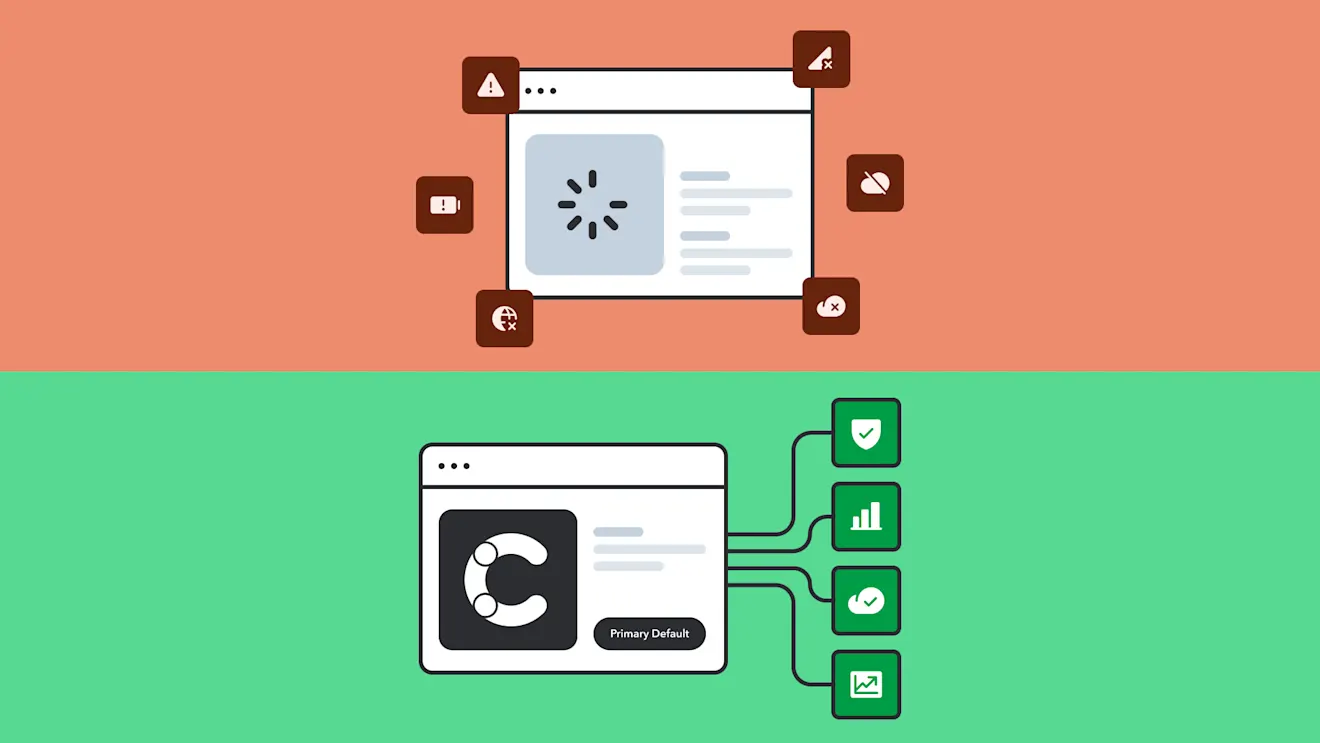
Legacy limitations: Legacy CMSes are typically optimized for websites and involve slow, inflexible publication workflows. Brands that want to branch out to new channels (say, mobile apps) typically need to integrate a new front end for that channel, a new content creation workflow, and new channel-specific tools — which means more complexity, less speed, and a greater chance of errors.
Developer dependencies: Another inefficiency of legacy systems is monolithic software architecture, which tightly couples frontend content presentation with backend code. That makes it harder (if not impossible) for content teams to work autonomously because they need to create developer tickets whenever they publish or update content.
Content efficiency: Legacy CMSes don’t share content well. If you’ve created an asset for your website, for example, you may have to create an entirely new version of the asset for your mobile app. In that environment, content teams need to do hours of tedious copy-paste work, and spend time remediating the inevitable errors and inconsistencies that creep into content as a result. Changes to content are also an issue, because, when updates are needed, brands need to adjust every instance of the same content across their ecosystem, which prompts another round of copy-pasting and the same risk of human error.
Vendor lock-in: Legacy CMSes often lock you into the features and functionalities that they ship with, and make it difficult to integrate tools that the vendor hasn’t authorized. If you want to take advantage of some new innovation to enhance your workflow, you have to hope your vendor lets you use it, or find a workaround that isn’t too painful.
Scaling: If your brand is growing, you’ll likely be building more pages, launching more campaigns, and reaching out to more audiences — and you’ll need your content operations to match the scope and pace of that expansion. The scaling inflexibility of legacy solutions can be a blocker here, forcing brands to rethink growth objectives and miss out on market opportunities at critical moments.
Why Contentful stands out from the crowd
While many migrations are simple “lift and shifts” in which brands simply transition their content catalogs to bigger, more powerful CMSes, migration to the Contentful Platform is different.
That’s because Contentful represents an alternative to legacy CMSes like WordPress — and a fundamental transformation in the way that you’ll store, work with, and publish content.
Here’s how our platform changes things.
Structured content: Contentful supports structured content models in which digital assets are broken down into their smallest modular components so that they can be reassembled and reused in different contexts. Structured content enables brands to spin up new content quickly and efficiently without having to build new assets from scratch.
Separation of content and presentation: Contentful decouples the backend technical administration of content from its frontend presentation. That frees up content teams to work autonomously on creative projects, publishing and editing without depending on developer support.
Omnichannel delivery: Contentful’s centralized content database makes it possible to create content once and then publish it on any channel across the brand’s digital ecosystem without any risk of downtime or formatting errors. That omnichannel scope means there’s no need to copy and paste content between different CMSes, which protects brand voice and the consistency of content experiences.
Composability: The Contentful Platform is inherently composable so you’re not locked into vendor-authorized features and functionalities. That means you can build the precise tech stack you need to create content experiences for your audience: Create your website with Next.js, manage ecommerce with Shopify, use Bynder as your digital asset manager (DAM), and so on.
AI automation: Contentful builds native AI innovation into content operations with a suite of AI-powered automations which include search engine optimization (SEO) and generative engine optimization (GEO), personalization, and localization tools. Accessible and available for non-technical content teams working within the platform, these automations add game-changing speed and efficiency to content management tasks at the click of a button, freeing editors and marketers to work on value-adding projects.
Extensibility: Contentful is built on a network of application programming interfaces (APIs) that support the free flow of data across every corner of the ecosystem. That API-first approach makes the content management tech stack extensible: Brands can connect new apps and functionalities, and other software ecosystems without coding complications. With that flexibility as a foundation, brands can take advantage of Contentful's vast Marketplace of integrations and plugins, and shape their new tech stacks down to the smallest detail.

Migrate to Contentful: The key steps
You’ve identified the problems with your legacy CMS, and you understand how Contentful is going to solve them — the next step is the move itself.
As we said earlier, when you migrate to Contentful, you’re initiating organizational change; it’s not a process you can go into blind. You’ll need to be across every step of your content migration plan in order to reduce the risk of service disruption and downtime, and to optimize the impact of your new architecture.
But don’t panic: You’re going to have support from end to end. Contentful Professional Services can help you develop your migration strategy, model your content architecture on our platform, and execute your plan.
If you’re still unsure about what your Contentful migration is going to look like, let’s take a look at the core steps.
1. Discovery and preparation
Before you can move content into Contentful, you need to understand what you’re actually moving.
A content audit helps you build a clear inventory of your existing digital asset ecosystem, including pages, URLs, content types, images, metadata, and performance data. This visibility is essential for making informed decisions about what to migrate, what to refresh, and what to retire entirely.
The audit is also an opportunity to tackle years of content sprawl. Identifying outdated, duplicate, or low-value content to remove upfront reduces the migration effort and ensures that only content with real value makes it into the new platform.
2. Content model design
Once you understand your content, the next step is designing how it will live in Contentful.
Contentful’s structured content architecture allows teams to model content around its function and relationship on the page (or app, or store display, etc.). Instead of migrating rigid page templates, you’ll define content types and fields that serve as reusable components and that support SEO and GEO, omnichannel delivery, personalization, localization, and more.
This is the ideal time to evaluate how to structure your data in its new environment, in a way that helps you achieve your current and future business goals. We can help you draft your content model to meet those objectives, and determine the best way to extract content data from your legacy system.
3. Transformation and execution
With your content model built, you can begin mapping extracted data to the new architecture. Contentful offers tools to assist migration teams as they move content entries and assets.
Prior to migration you’ll need to extract your content safely, ensuring that nothing is lost, corrupted, or trapped in its legacy source. Having content stored in multiple formats prior to export is a good idea because it gives you options if you encounter formatting issues down the line. It’s worth pointing out that Contentful’s application programming interface-first (API-first) architecture is an advantage because it reduces the possibility of format incompatibility between the various components of the tech stack that you’ve built.
Further down the line, we're exploring ways to make transformation and execution smoother and easier, by leveraging the Model Context Protocol (MCP). Developed by Anthropic, MCP standardizes the way that AI systems interact with internal tools in order to automate complex migration tasks, eliminate friction, and further optimize efficiency.
4. Testing and quality assurance
Testing and quality assurance (QA) are integral to successful migration.
In addition to analytics capabilities within Contentful, human teams should validate the effectiveness of the migration. Editors, for example, can review and validate content presentation, and developers can test APIs, to the extent that leadership is satisfied the new architecture is meeting both brand and audience expectations.
Phased migration
When you’ve completed your content modeling and formatting work, you can leverage Contentful’s composable architecture to migrate in phases, moving assets and workflows incrementally rather than in one fell swoop.
That phased migration protects existing systems and services, reducing the risk of disruption or downtime, while giving teams time to test, validate, and optimize content and experiences on the new platform.
For example, you could choose a single service from your monolithic CMS and migrate that in isolation, stress-testing in the new environment to ensure everything runs smoothly. You could also write and test migration scripts on small samples of content, and continue tweaking your content model to ensure the process runs as expected.
Contentful doesn’t force you into migration templates: You can tailor your process to your business needs. This approach also allows you to develop feedback loops, and continually refine your migration process. Remember: It’s possible to run multiple CMSes at the same time, alongside Contentful, and move at your own pace — whether that be months or even years.
Start your Contentful migration plan today
We get that the decision to migrate to Contentful is a big one, but if you’ve defined your migration plan and prepared effectively, you’ll move with confidence and optimize the impact of your new architecture.
And remember, we’re here for you at every step, helping you design your content model, plan migration steps, and handle the technical challenges of the move.
Ready to get started? You can learn how our platform stacks up against legacy counterparts like WordPress and Drupal, read Contentful success stories from across the globe, or browse our Learning Center for a range of introductory resources, including our free Migrating to Contentful course.
Alternatively, if you need to know more about the platform and its capabilities, get in touch with our sales team to arrange a demo.

blogDetail.subscribeCard.title
blogDetail.subscribeCard.description
blogDetail.authors

With a background in enterprise web development and marketing, Aubrie is a Demo Engineer at Contentful who helps teams achieve their digital goals by bridging the gaps between key stakeholders, editors, developers and end users.

Bilal is a Principal Solution Architect at Contentful with extensive experience delivering scalable, highly available, and high-performance solutions on a variety of technology stacks.
blogDetail.relatedArticles
Blazor vs. React: Choosing a frontend framework
June 16, 2025
Understanding AI by its building blocks: The AI ecosystem
March 5, 2026
Clerk auth: What it is and how to add it to your Next.js project
October 22, 2025