Near real-time visibility, now in Contentful: Announcing Enterprise Observability
Published on April 21, 2026



Inspiration for your inbox
Subscribe and stay up-to-date on best practices for delivering modern digital experiences.
Modern digital infrastructure cannot afford black boxes.
Today’s enterprises run more digital experiences than ever, across websites, apps, portals, and channels that serve both customers and employees. Behind those experiences sits a deeply interconnected mix of cloud infrastructure, applications, databases, edge services, and APIs.
With the launch of Contentful Enterprise Observability, we’re addressing a growing need within that complexity: giving teams near real-time visibility into how their content platform behaves as part of the broader system.
Because when performance drops, errors spike, or traffic surges, the impact is not only technical — it can also be commercial, affecting revenue, customer trust, and operational confidence. Teams need to understand not just that something is wrong, but where it begins and how it propagates.
Monitor and understand system behavior across the stack
Enterprise observability is the ability to monitor and understand system behavior across your entire digital stack, from infrastructure and applications to APIs and content delivery, in near real time. It allows teams to detect issues faster, investigate incidents with full context, and maintain confidence in production systems.
That expectation now applies to every platform in the stack that wants to be considered enterprise-ready. The broader market reflects that shift: Grafana Labs’ 2025 observability survey found that 85% of companies are using unified infrastructure and application observability in some capacity, while 49% said observability is considered critical at the CTO, C-level, or VP level.
Contentful Enterprise Observability is designed to fit into this model: as a platform, it gives teams the ability to monitor, understand, and operate with the same confidence they expect from the rest of their infrastructure.
It also builds on the broader investments we are making in enterprise readiness, from identity and access management to auditability, and now near-real-time operational visibility.
Apply operational discipline to content delivery
Digital experience platforms are no longer evaluated only on how well they help teams create and manage content. They are also judged on how well they perform as part of the systems behind modern digital experiences, from commerce journeys and global websites to customer portals, product releases, and campaign launches, where performance and reliability have direct business impact. As a result, the bar has moved. Teams want to apply the same operational discipline to content delivery that they already apply elsewhere in the stack.
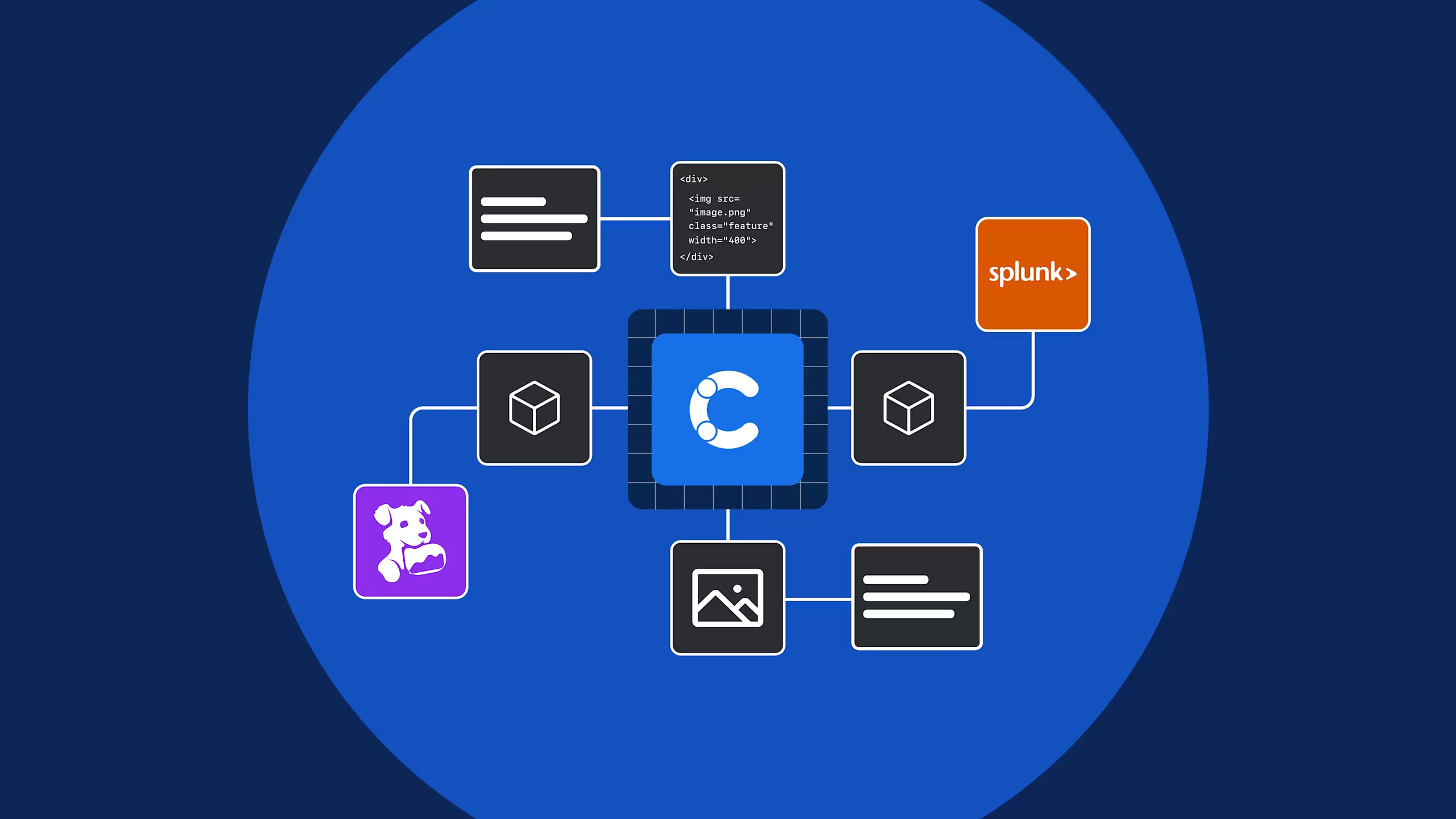
That is where enterprise observability in Contentful comes in. It gives teams a way to bring Contentful operational data into their own cloud environment and the observability workflows they already trust. Instead of treating content delivery as a separate operational domain, they can bring it into the same systems, dashboards, and incident processes they already use every day.
The business value is clear: reduce operational costs and improve customer experience with faster incident investigation, more proactive performance monitoring, and greater confidence in the systems behind customer-facing and employee-facing experiences. For teams running high-stakes launches, global sites, or high-traffic digital properties, that means less time spent chasing answers and more time protecting uptime and performance.
What teams can see from day one
The first milestone focuses on a foundational need: near-real-time visibility into Content Delivery API activity through log streaming, with logs forwarded in rolling batches every few minutes.
With Contentful Enterprise Observability, teams can stream Content Delivery API logs into the same environments where they already monitor applications, infrastructure, and user-facing systems. That gives them a more practical way to investigate issues, track performance trends, understand cache behavior, and connect Contentful delivery activity to the broader context of their stack.
This is the foundation of Contentful observability: bringing delivery signals into the same operational workflows teams already rely on.
From day one, those logs include request-level details such as request time, request method, request path, query parameters, response status, response duration, payload size, cache status, space ID, route, user agent, and unique request ID. In practice, that gives teams the signals they need to investigate delivery issues, monitor performance, and understand how content delivery behaves in production.
That value shows up immediately in two ways:
When an incident occurs, teams can investigate Content Delivery API activity in a self-serve way, using their own observability tools and workflows rather than relying on manual processes. They can look at response status, request paths, query patterns, latency, and cache behavior to understand what is happening and where to focus next.
Over time, it also helps teams optimize performance. By working with real delivery logs, they can spot patterns such as rising latency, inefficient request behavior, or increasing cache misses, then make changes based on evidence rather than guesswork.
A Content Delivery API (CDA) event example
This is the kind of operational context teams need when they are asking practical questions under real conditions. Is an issue isolated to one route or request pattern? Is latency rising over time, or is it concentrated in a specific type of request? Are cache misses increasing, and if so, where? What changed during a launch, a campaign spike, or another high-pressure moment?
For example, a platform engineer notices that pages in a product listing section are loading more slowly than usual. Within minutes, they look at CDA logs in Datadog, spot that a recently updated integration is generating requests that bypass cache entirely, and hand the fix to the team that owns that integration. No support ticket. No waiting. Just a faster path from signal to action.
Enterprise Observability becomes immediately useful: not as abstract visibility, but as practical insight teams can use to investigate faster, optimize with more confidence, and operate Contentful with a clearer view of what is happening.
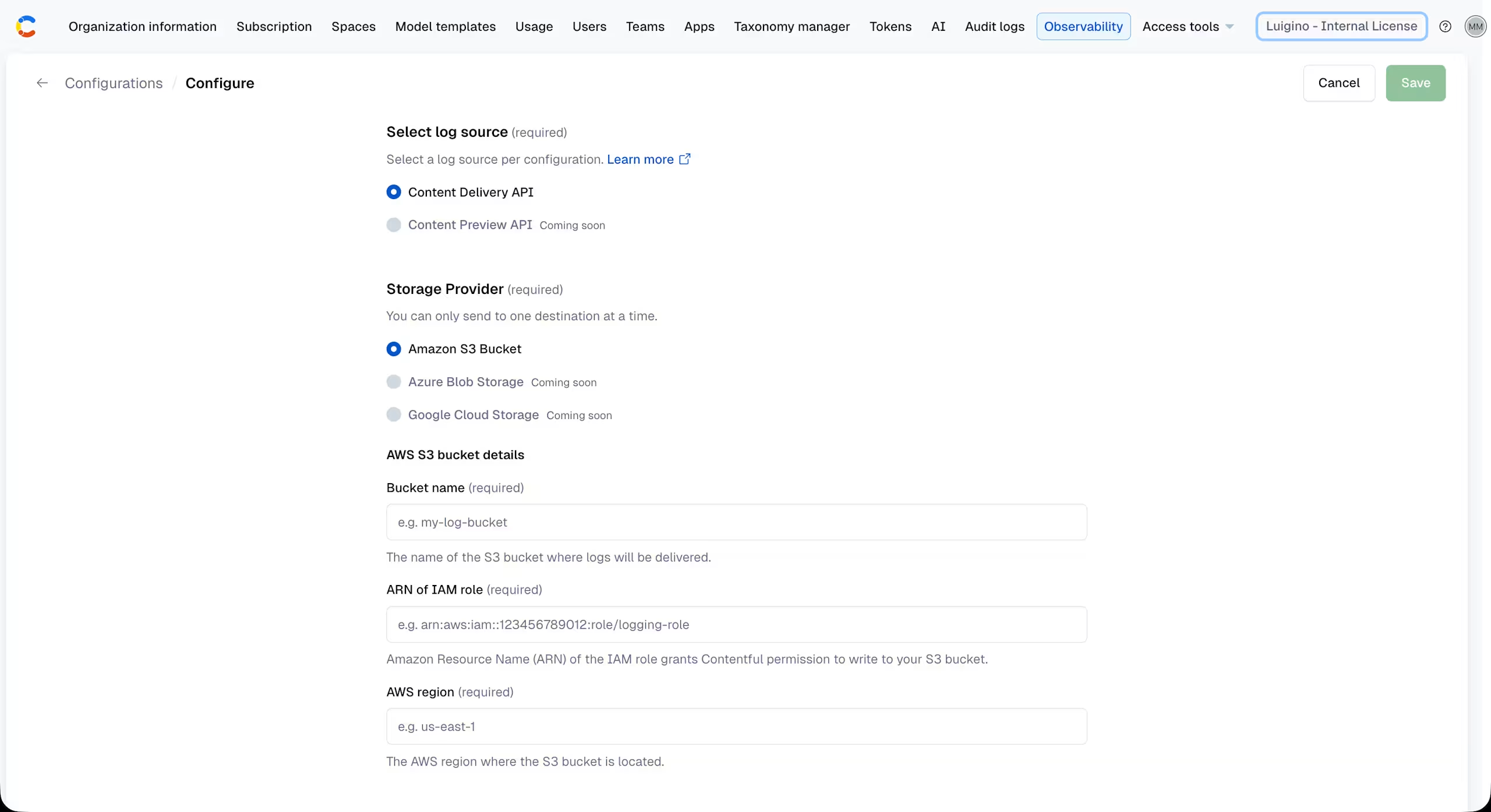
The new Observability configuration tab in the Organization Settings
Built for the stack teams already have
One of the most important decisions behind observability is where the data goes. Enterprise teams do not want another isolated monitoring surface. They have already invested in cloud infrastructure and observability platforms such as Datadog, Splunk, Grafana, and New Relic, along with the alerting workflows, dashboards, and security controls that sit around them. They want the platforms they use to fit into that operating model, not force a parallel one.
Contentful observability is designed to integrate directly into this existing ecosystem.
Organizations with access can now enable Content Delivery API log forwarding to Amazon S3 directly from their organization settings. From there, teams can route and analyze that data through the tooling they already use.
This is a deliberate product choice. The goal is not to introduce another place to look. It is to make Contentful visible inside the places teams already trust.
Starting with delivery visibility, building toward broader observability
Contentful Enterprise Observability starts with the right foundation: one API, one destination, near-real-time visibility.
Today, that means Content Delivery API logs streamed to AWS S3, Azure Blob Storage, or Google Cloud Storage. Next comes expansion in two directions: more APIs, including Content Preview API, Content Management API, and GraphQL.
Over time, that creates a broader operational view across Contentful and a stronger base for connecting that data to the observability platforms teams already use.
This launch is the first step. The bigger goal is a broader observability layer for Contentful, built to grow with the needs of enterprise teams.

Inspiration for your inbox
Subscribe and stay up-to-date on best practices for delivering modern digital experiences.
Meet the authors

Malin is a Senior Product Manager at Contentful, leading the Platform Insights team in providing customers with greater visibility into their use of the platform. By delivering analytics, reporting, and governance capabilities, he helps organizations make data-driven decisions, optimize their usage, and ensure transparency. With over a decade of experience in B2B SaaS across mobile and web, Malin specializes in building insights-driven solutions that empower customers. Outside work, he enjoys cycling long distances, running, illustrating, and exploring psychology.

Marco is a B2B content creator and product marketer blending technical with creative skills. From the early stages of product ideation to a successful market launch, all the way through to sales enablement, he loves to take products and translate them into clear, relatable messages.
Related articles
Introducing Contentful Skills: Your AI coding agent, now fluent in Contentful
May 20, 2026

Introducing Palmata by Contentful: A new AI discovery platform for the age of answer engines
June 23, 2026
From creation to optimization: Automate your content process with new AI innovations from Contentful
March 31, 2025

Ready to start building?
Put everything you learned into action. Create and publish your content with Contentful — no credit card required.