Remote MCP is now generally available, bringing Contentful into AI workflows at enterprise scale
Published on July 21, 2026



Inspiration for your inbox
Subscribe and stay up-to-date on best practices for delivering modern digital experiences.
AI systems are moving from answering questions to taking action. For that shift to become part of day-to-day operations, AI needs a secure, standardized way to connect to the systems where work actually happens.
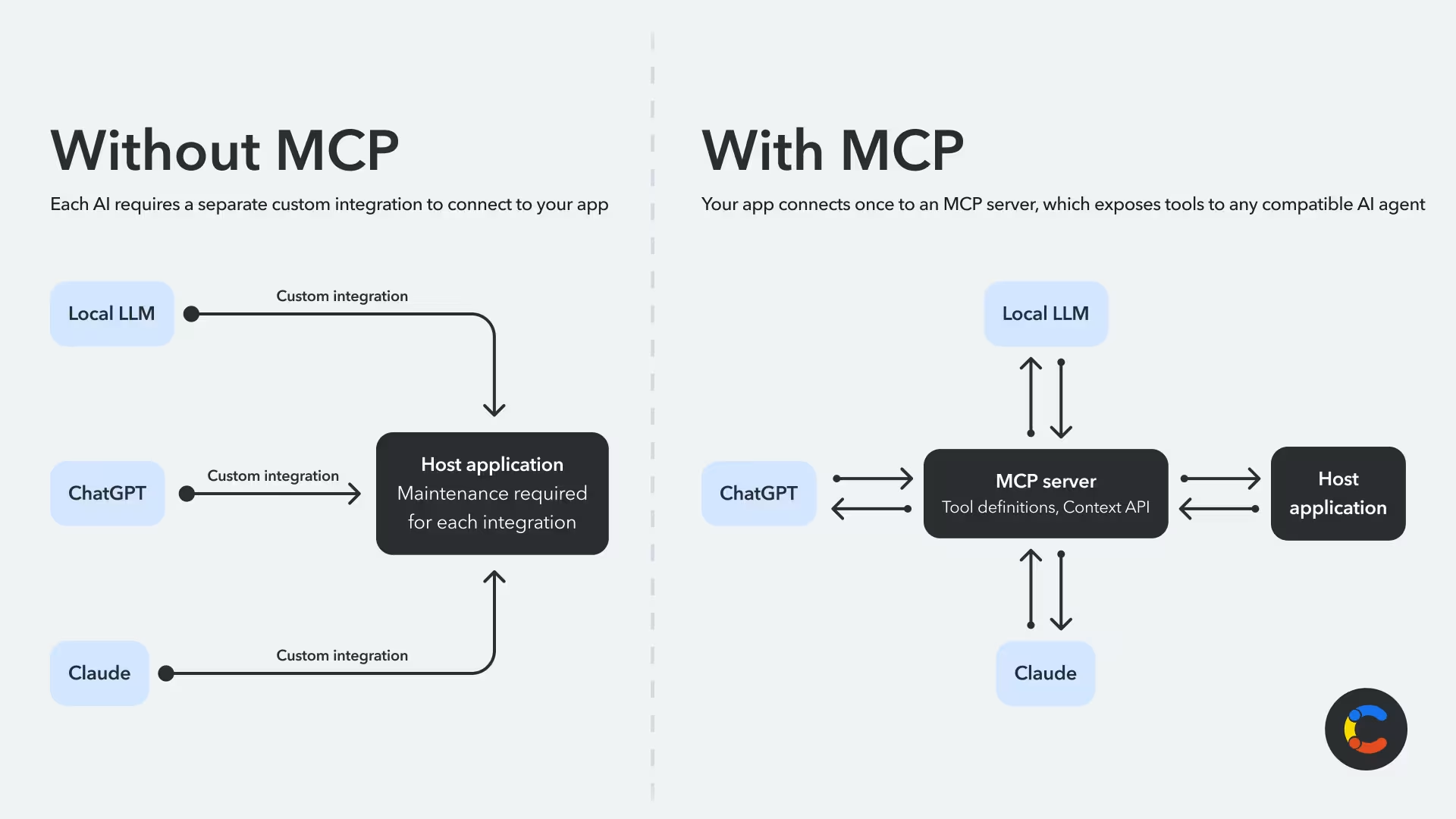
That’s what the Model Context Protocol (MCP) makes possible, providing a standard way for LLMs — whether acting as AI agents or working under direct human control — to discover, connect to, and interact with compatible external systems.
Remote MCP brings that standard to Contentful through a cloud-hosted, OAuth-secured server. It removes the need for local installation and configuration, making it easier for organizations to connect external AI assistants and agentic workflows to structured content, metadata, and content models for more reliable review, analysis, and supervised action.
As AI moves deeper into day-to-day operations, the question isn’t whether teams can use it to generate ideas or speed up individual tasks. It’s how they bring AI into real operating workflows in a way that scales across teams, respects governance, and creates a reliable path from experimentation to production.
From AI experimentation to AI adoption
Today, a lot of AI adoption starts at the edges of the business. A developer tries a new tool. A marketer experiments with an external assistant. A content team finds a useful workflow, and early momentum starts to build.
Those first steps can surface real value. The next step is creating a foundation teams can build on.
As organizations move toward broader AI adoption, they need a more repeatable way to connect AI assistants and agents to core systems like Contentful. That connection has to work across teams, without custom integrations, user-by-user local setup, or ad hoc access patterns. It also has to fit the way the business already operates.
Remote MCP provides that foundation, giving teams a shared connection to Contentful that can start small, expand over time, and support more teams across the business.
A governed access model for content operations
For broader AI adoption to work in practice, teams also need an access model that fits enterprise content operations.
Remote MCP makes it easier to bring Contentful into AI assistants and agents without requiring every user to run a local MCP server. Organizations can instead offer a hosted connection that’s easier to introduce across marketing, content operations, localization, and technical teams.
It also creates a more controlled path to adoption. Teams can start with read-only or insight-first workflows, enable only the right tools for the right spaces, and expand from there as confidence grows.
Over time, that same model creates a stronger foundation for more agentic workflows. As AI systems become more capable of reviewing content, surfacing issues, recommending changes, and taking supervised action, organizations need the connection layer behind those workflows to be persistent, reusable, and aligned with existing permissions and rollout controls. That’s where Remote MCP fits.
Built for how enterprise marketing teams operate
Remote MCP is especially relevant for organizations operating across multiple brands, regions, business units, or large content estates, where AI adoption needs to scale without losing consistency.
In that kind of environment, the challenge usually isn’t finding a single useful AI workflow. It’s making that workflow repeatable across teams with different responsibilities, different levels of technical comfort, and different governance requirements.
Remote MCP gives enterprise teams a way to bring Contentful into the AI tools they already use through a hosted model that can be rolled out more broadly, while still aligning access to the structures and boundaries the organization already has in place.
For marketing and content teams, that means a simpler way to review, assess, and research content through AI assistants and agents. For platform and governance teams, it creates a clearer path for rollout, with approved tools and space-level controls. And for developers and solution architects, it creates an opportunity to define the guardrails once and make that access reusable across the business.
Where AI can start delivering value in content workflows
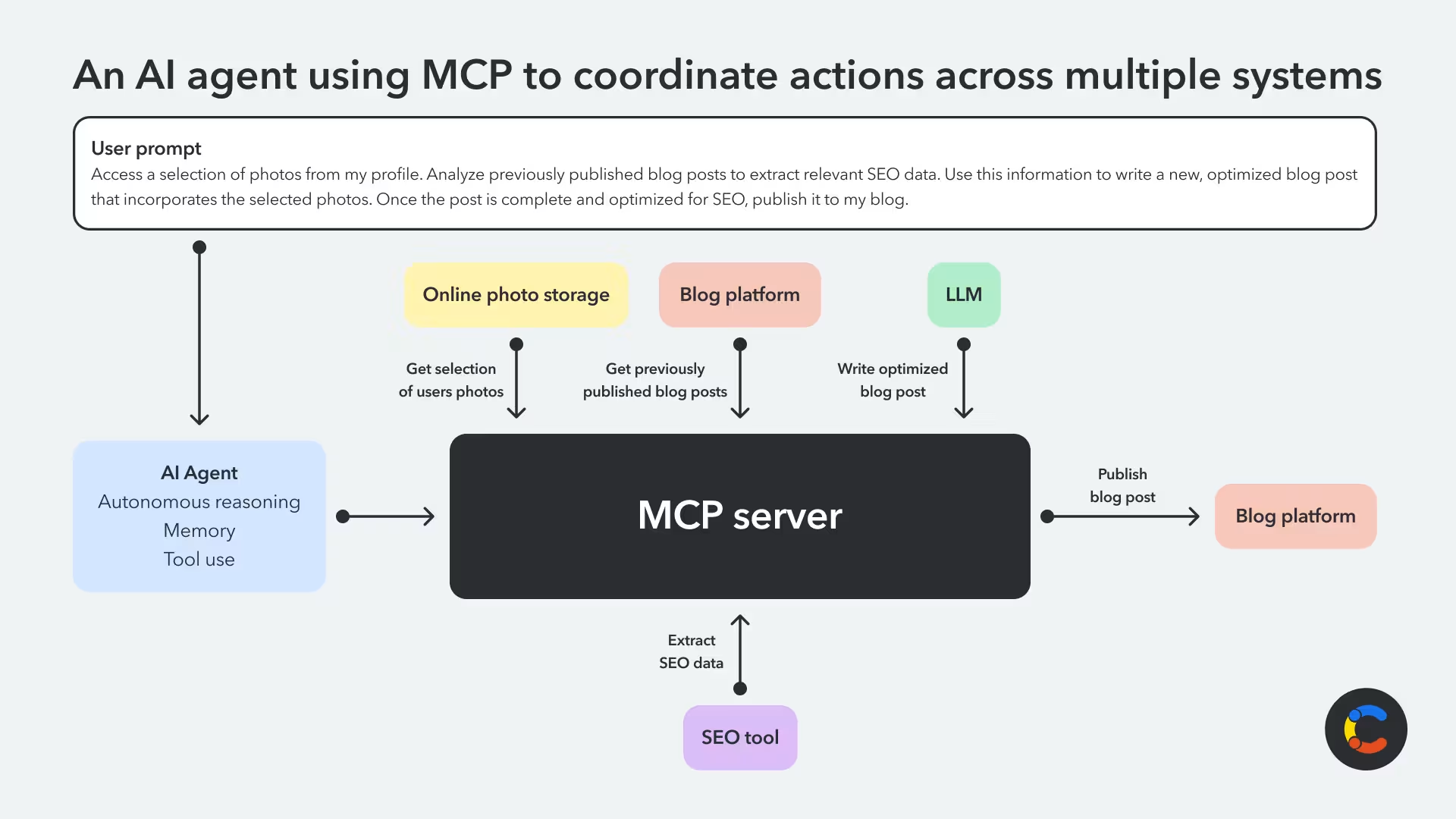
When Contentful is easier to connect to external AI applications through a more controlled model, teams can start applying AI to content workflows that benefit from faster review, broader visibility, and more consistent execution.
That includes workflows like content QA, launch readiness reviews, conversational content research, localization reviews, and other assessment-heavy tasks where AI can help teams move faster without immediately changing production content. For example, a marketer could ask an approved assistant to review all campaign entries for missing localization fields before launch. A content operations lead could ask for a list of pages with missing alt text or inconsistent metadata across a product launch.
It also creates a more practical path toward human-supervised action. Over time, organizations can move from insight-first workflows toward draft creation, structured updates, and more advanced AI-assisted operations, while still expanding access progressively rather than all at once.
For most enterprises, the value of AI will grow through staged adoption: introducing useful workflows first, building trust over time, and expanding capability as governance maturity grows.
Remote MCP is built for that progression.
A foundation for enterprise AI content operations
Enterprise teams are looking for practical ways to bring AI into the systems and workflows they already manage. Remote MCP provides a more repeatable way to do that with Contentful, making it possible to connect AI assistants and agents to structured content through a shared, hosted connection.
Its general availability comes at a moment when enterprises are moving from isolated AI experiments to broader agentic operations. Remote MCP makes that next step more practical: teams can begin with review, research, and QA workflows today, then expand toward more supervised agentic operations over time.
Learn more about how Contentful supports AI-powered workflows across the content lifecycle, or consult our technical docs for a complete overview on MCP servers.

Inspiration for your inbox
Subscribe and stay up-to-date on best practices for delivering modern digital experiences.
Meet the authors

Niko is a product manager of developer experience at Contentful. Also, an MCP enthusiast.

Stephanie Diaz
Product Marketing Manager
Stephanie Diaz is a Product Marketing Manager at Contentful, where she leads product messaging, positioning, and launch strategy for the Contentful Ecosystem. She's passionate about turning technical capabilities into clear, compelling narratives that connect platform innovation, enterprise use cases, and ecosystem storytelling.
Related articles
From audit trail to active signal: Introducing near-real-time audit logs
August 18, 2026
Assemble intelligent experiences at scale with Contentful Studio
March 27, 2024
Custom Flags are here: End-to-end digital experience optimization in one platform
October 2, 2025

Ready to start building?
Put everything you learned into action. Create and publish your content with Contentful — no credit card required.