How we built our blog TL;DR widget with AI Actions (and how your team can use it too)
Published on April 30, 2026



Inspiration for your inbox
Subscribe and stay up-to-date on best practices for delivering modern digital experiences.
“Too long; didn’t read”, or a TL;DR, is shorthand for “before I read this, give me the executive summary.”
They’re easy enough to add to an occasional blog post. The tougher part is making it a repeatable part of your editorial process.
That was the challenge for the Brand Studio team here at Contentful. We wanted to add a TL;DR widget to the company blog so readers could quickly understand what a post covers, but we also needed a workflow that would bring large portions of our blog archive up to the same standard.
Using AI Actions in Contentful, we built a workflow for both cases. Our content editors can generate and review a TL;DR when a new draft is ready, and with Bulk AI Actions, we can apply that same pattern across older posts in manageable batches.
In this post, we’ll show how the setup works, where editorial review still matters, and why Bulk AI Actions made the whole approach practical at scale.

What a TL;DR is and why it’s useful
A reader landing on a blog post is usually making a quick decision: dive in now, skim for the essentials, or come back later. That’s the benefit of a well-written TL;DR. It supports all three behaviors by making the value of the piece clear right away and giving more readers an easier way into the content.
There may also be a secondary benefit for AI-powered search and answer experiences. Direct evidence linking TL;DRs to generative engine optimization (GEO) or answer engine optimization (AEO) outcomes is limited, but they may make key takeaways easier for AI systems to interpret and reuse.
The overarching consideration, of course, is consistency. Writing a strong TL;DR isn’t difficult in theory, but it’s one more task in a busy production workflow. And once you decide TL;DRs should become standard, you run into a second problem: what do you do with the older posts that don’t have one?
How the TL;DR workflow works
We added TL;DRs to the Contentful blog as a distinct summary block at the top of each post. For readers, that means a faster way to understand what a piece covers before committing to the full read. For our content team, it creates a clearer standard for how key takeaways should surface.
Behind that widget is an AI Action that drafts the TL;DR content for review. When a new blog post is ready, one of our content editors triggers the TL;DR AI Action, reviews the suggested summary, revises it where needed, and publishes the final version.
The widget handles presentation on the front end; the AI Action handles draft generation in the content model. That separation keeps the reader experience consistent while giving our team a flexible editorial workflow.
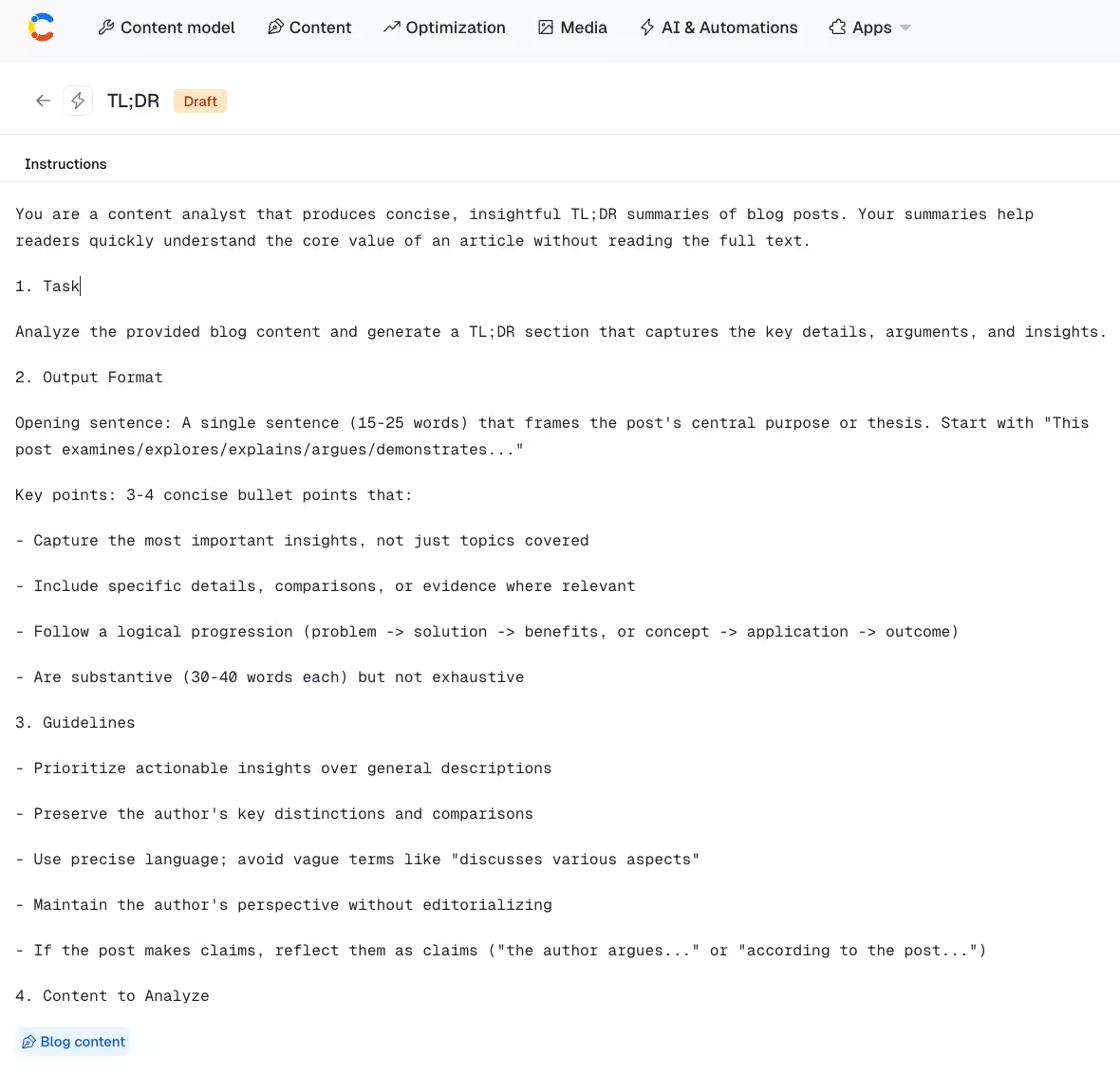
Setting up the TL;DR widget in Contentful
Why Bulk AI Actions made this scalable
This new workflow worked really well for new posts, but we then turned to our content library with hundreds of blog posts dating back several years. Once TL;DRs became part of our publishing standard, we needed a practical way to add them to posts that had been published before the widget – or generative AI – existed.
Bulk AI Actions made that possible. Instead of updating entries one by one, our team can select a batch of blog posts, run the same TL;DR AI Action across them, and write the results into the field the widget already uses. Editors then review each generated summary individually, approving, editing, or dismissing it before anything goes live.
That’s what made the project workable. Bulk AI Actions didn’t change our editorial standards. They gave us a realistic way to apply those standards across older content without turning the work into a long manual cleanup effort. Bulk runs can support up to 200 entries at a time, too, which makes the process efficient enough to use in batches while still leaving room for careful review.
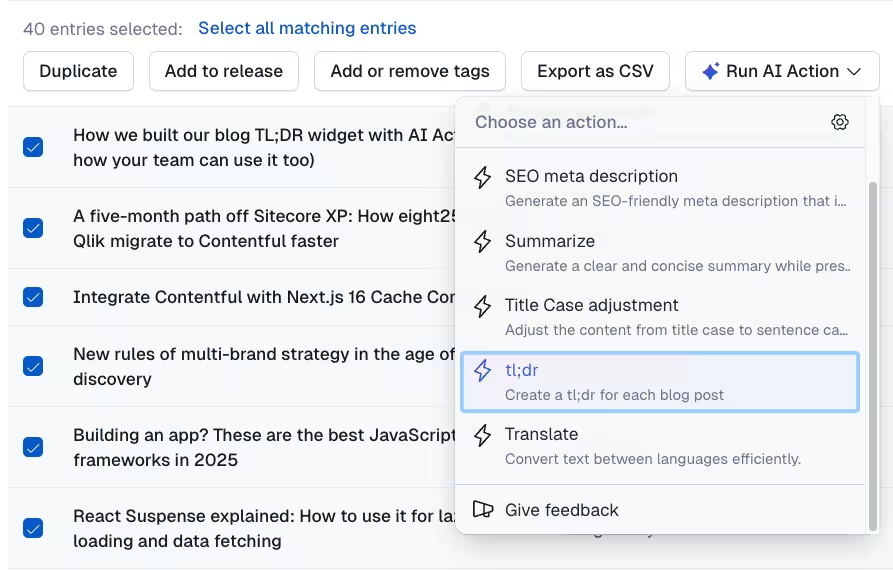
Select a batch of blog posts and run the same TL;DR Bulk AI Action across all of them.
A practical note on TL;DR quality and governance
A TL;DR may be short, but it carries a lot of weight. It’s often one of the first things a reader sees, which means it has to be accurate, current, and recognizably in your brand voice.
That’s why we treat every AI-generated TL;DR as a draft rather than a finished asset. Editors can configure the AI Action with guardrails for house style and tone, but they still need to check that the summary reflects what the post actually says (not what an earlier draft said or what the model inferred). If a claim doesn’t appear in the body, it shouldn’t appear in the TL;DR either. And if the post changes materially during editing, the TL;DR should be regenerated or revised so it stays aligned with the final version.
All of which is to say: brand voice matters. Two summaries can be equally accurate, but only one will sound like your company. The value of the workflow isn’t that it removes editorial judgment. It’s that it gives editors a faster first draft while keeping that judgment where it belongs.
Where else this workflow pattern can help
The strength of the TL;DR workflow is how it illustrates the broader pattern behind it: AI-assisted drafting paired with editorial review.
That same approach can help with other repetitive content tasks that benefit from a strong first draft and a human final pass. Meta descriptions are one obvious candidate. Alt text for visual assets is another, especially when teams are trying to improve accessibility coverage across a large content set without turning every update into a manual rewrite project. AI support for taxonomy can also help make content easier to organize and discover, as long as the final decisions still reflect editorial intent.
The key thing isn’t to automate as many fields as possible, but to identify the work that is repetitive, important, and easy to leave unfinished, then build a workflow that helps editors complete it more consistently. That’s the pattern we found most useful here, and it’s the one we would apply to other use cases as well.
The bottom line
We added a TL;DR widget to the Contentful blog to make posts easier to scan, but the bigger win was building a workflow our team could actually maintain.
By pairing AI Actions with editorial review, we found a way to generate TL;DRs for new posts and extend that same standard across older content without turning the effort into a manual cleanup project. Bulk AI Actions made that possible at a scale that still feels workable for an editorial team.
Several customers who have seen the TL;DR in action have asked how they can add it to their company blogs and pages. If you’re already a Contentful user, you can find it in the AI Actions directory under the “AI & Automations” tab.
Would you like to learn more? Contact us for a demo, and our team can show you how AI Actions can support your content creation efforts and much more. How’s that for a TL;DR?

Inspiration for your inbox
Subscribe and stay up-to-date on best practices for delivering modern digital experiences.
Meet the authors

Bulent collaborates with Contentful's customers, partners and users to publish articles that support and elevate the community.

Alex is an AI Product Manager at Contentful with a focus on leveraging LLMs, natural language processing, and knowledge graphs to shape the next generation of digital experiences. He's passionate about building intelligent, scalable solutions that enhance personalization and content operations.
Related articles

Omnichannel retail: What it is, and how to make it work
July 28, 2026

7 effective ways of using website content personalization to create compelling customer experiences
November 4, 2024

Contentful vs. Sitecore: Helpful points to consider
September 16, 2024

Ready to start building?
Put everything you learned into action. Create and publish your content with Contentful — no credit card required.