Headless CMS vs. traditional CMS: Which architecture wins in a composable DXP world?
Updated on January 20, 2026




Inspiration for your inbox
Subscribe and stay up-to-date on best practices for delivering modern digital experiences.
Using a monolithic content management system, such as WordPress or Drupal, can limit omnichannel flexibility, often increase time to publish, and may lead to costly rework when changes are made.
If you're hitting these common CMS limitations, it's time to adopt the modern alternative: a headless CMS — the foundation many teams now build on as they evolve toward a fully composable digital experience platform (DXP).
Let's explore how a headless CMS lets you define your own digital identity and publish content to any device or platform, and why a digital experience platform like Contentful takes this further with robust and flexible tools for both marketers and developers.
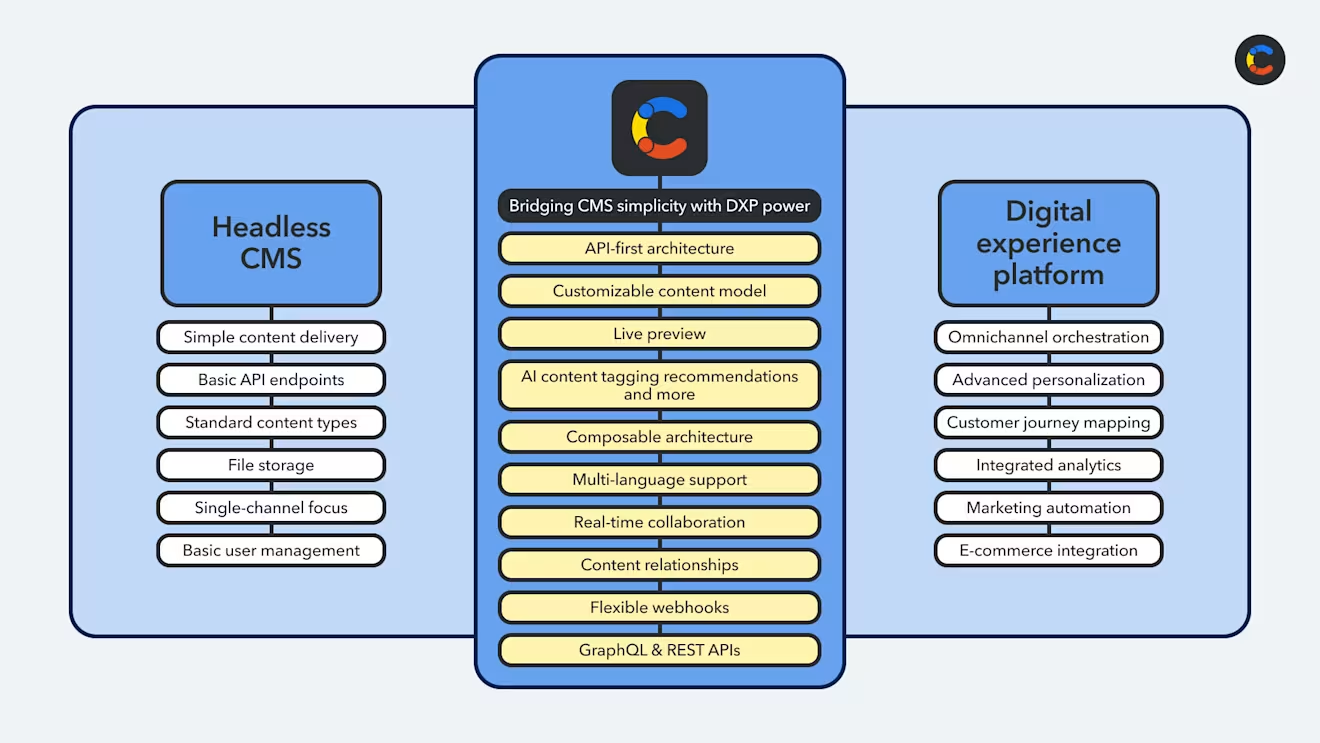
Venn diagram showing where a headless CMS intersects with the Contentful digital experience platform.
What is a headless CMS?
Typically, a CMS provides a storage layer, access control through roles and permissions, and an integrated user interface for creating, editing, and managing your digital content.
A CMS is usually built into your publishing platform. You install it as a single hosted application and then are stuck with it — because it tightly couples the content you manage with frontend rendering, you’re tied to its baseline features, data structure, and publishing workflows. The most popular example of this is WordPress: While you can install and customize themes on it, the data behind it is rigidly organized in the default format, intended only for use within WordPress itself.
This was fine in the nascent internet, but in the modern era you manage multiple brands and channels, each with their own regional sites and apps. You want to get the most out of your content. Being able to update each touchpoint — for example, with a Black Friday banner — without having to touch a separate CMS for each is required for publishing content at scale.
A headless CMS addresses this by decoupling the back and front ends, allowing you to define your own data structures. You then connect any front end to it, each with its own independent behavior and unique identity. For example, you could connect a mobile-optimized app and responsive website to the same headless CMS. They don’t tie you down to a single publishing platform or editing interface, and they let you choose the tools and designs that best meet each platform you want to deploy to, from smart devices to billboards.
Headless CMSes are API-first, allowing you to build consumer applications that consume directly from the CMS without needing plugins or adapters to translate the CMS content into your intended interface. These APIs are usually frontend developer-friendly and language agnostic, often implemented in REST or GraphQL. Digital content teams also benefit from added flexibility, as they can adapt content models for new campaigns or use cases and integrate their preferred tools into flexible workflows.
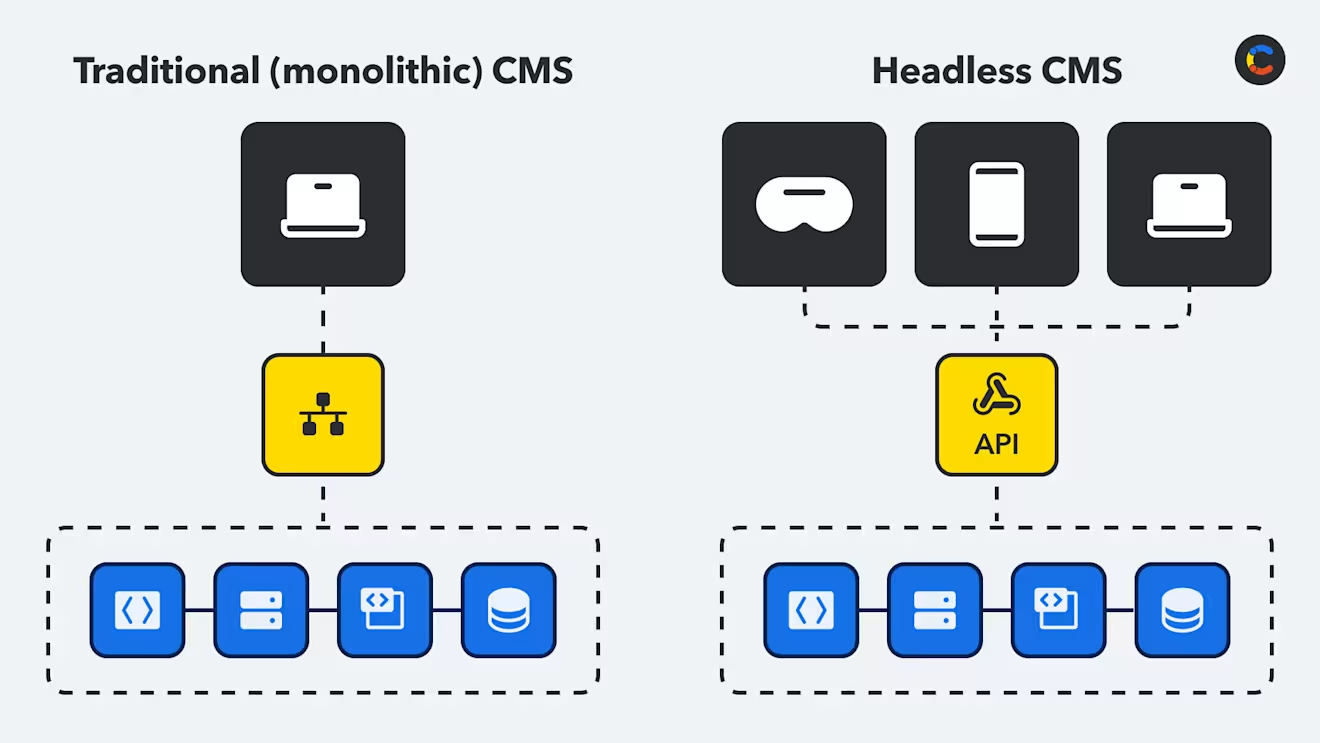
Traditional monolithic vs. headless CMS. Headless allows greater access for more devices and channels.
1. Benefits for marketers
Seamless cross-platform and multichannel content delivery
Traditional CMSes are designed for web content only. With today’s plethora of mobile applications, voice assistants, and various social and smart interfaces, delivering content across multiple platforms and channels is crucial for reaching the largest possible audience and realizing the full value of your content investments.
A headless CMS enables consistent content delivery across different platforms. Whether it's a website, mobile app, IoT device, or any other channel, you can distribute your content without duplicating efforts or compromising consistency.
Scalability and future-proofing
As your website or application grows, scalability becomes paramount. Scaling a monolithic CMS can be complex and often requires significant server and development resources to cope with the increased demand.
Thanks to their decoupled nature and distributed architecture, headless CMSes are inherently scalable. This allows you to adapt to evolving business needs and handle high-traffic periods such as Black Friday or a page on your site going unexpectedly viral. With the flexibility to adopt new technologies on the front end, you're future-proofing your code.
Localizing
A headless CMS, particularly as part of a digital experience platform, significantly enhances the ability to localize by centralizing content management. The localization capabilities in the Contentful platform, for example, allow for easy regional targeting of fields and articles. In addition to integrating with translation services, Contentful’s AI capabilities considerably reduce translation costs by enabling translated content with a single click.
Experimenting and optimizing
With this centralized control comes a much improved ability to experiment, optimize, and personalize content and designs. When integrated across multiple brands, platforms, and devices this provides you with a superior level of control from a single interface. A/B testing, real-time updates, and analytics become easier to configure and manage, even when the content is consumed across multiple, disparate platforms. This control also brings personalization to the user, enabling you to tailor experiences based on user preferences and demographics. You can adjust messaging and visuals to resonate with specific audiences and enhance user engagement, drive conversion rates, and create a more impactful brand.
Improved view of your entire content lifecycle
The control provided by a DXP also improves your view of the entire content lifecycle, from creation to publication to removal. This increased observability allows you to understand which content performs better and why, informing your content strategy and helping marketers create more effective campaigns.
2. Benefits for developers
Embrace the freedom of decoupled architecture
Traditional CMSes tightly couple the frontend presentation layer of the website with the backend content management system and database, effectively making them one application. This monolithic approach makes it challenging to introduce new technologies, scale, or experiment.
A headless CMS makes your content available through an API that can be called upon by anything, anywhere. By transitioning to a headless CMS, you can use any frontend framework you desire, be it React, Vue, Angular, or anything else.
Flexibility for frontend developers
A headless CMS takes care of the back end, so you can focus solely on creating engaging user interfaces. The separation between content and presentation empowers developers to iterate faster and implement changes without disrupting day-to-day content production.
Many headless CMS platforms offer GraphQL in addition to REST APIs, providing efficient queries. Having versioned APIs, or separate environments, allows developers to iterate on the content model for new use cases without disrupting current production code or ongoing frontend work.
Enable feature expansion at both ends
A headless CMS as part of a composable architecture allows you to readily integrate other SaaS functionality. You can integrate services like search, single sign on (SSO), analytics, workflow, and localization into the application, and you can enjoy enhanced personalization, customer support chat, payments, and much more on the front end. This can drastically reduce the legwork required for a team looking to build their next level app using modular components.
Moving to a headless CMS also allows you to integrate advanced features — such as multimodal AI tooling and AI Actions — from across the market as they become available, keeping you on the cutting edge of functionality and user experience.
Enhanced performance and faster load times
Monolithic CMS platforms usually generate complete HTML pages on the server side, which can result in slower page load times, especially as your audience grows. Additionally, these platforms often bundle unnecessary code and features that contribute to bloated page sizes.
A headless CMS gives you full control of the HTML and JavaScript on each page, allowing you to create highly optimized, lightweight websites and apps. Decoupling the back and front ends improves performance and results in a fast, responsive user experience.
Headless CMS platforms may also provide other optimization functionality that removes the need for backend code, such as image optimization through an API and global content caching, and delivery through a provided content delivery network (CDN). Regionally cached data in a CDN stores content closer to where your users are located, which speeds up delivery and improves the user experience by reducing delays.
3. Benefits for enterprises
Smoother upgrades and maintenance
Upgrading a monolithic CMS can involve updates to the core system, plugins, themes, and other customizations. Doing this can create compatibility issues, significant development effort, and extended release schedules.
Headless CMS platforms alleviate these challenges. Since the frontend presentation layer is decoupled from the backend content management system, you can upgrade or make changes to either component independently. The teams responsible for each component can run their development life cycle independently of each other, reducing friction and improving release schedules.
Eliminate vendor lock-in and expensive version upgrades
Vendor lock-in is a concern when working with traditional CMSes. Switching to a new CMS may require rebuilding the website or application from scratch, resulting in significant time, effort, and cost.
Drupal and WordPress both require significant re-working to upgrade. This means it’s often easier to migrate to a headless CMS and bespoke front end rather than upgrading legacy sites for the modern web. In fact, Drupal 7 requires a complete migration because it is now end-of-life.
Headless CMSes provide a remedy for vendor lock-in by offering content in a standardized and agnostic manner through APIs. They store and manage content independently from the presentation layer, making it easier to migrate to a different provider.

Headless CMS and content modeling
Headless CMS platforms allow your team to define the content structure. The art of content modeling is that it lets you define custom types, expand beyond the vision of the CMS, and make your content more portable. You can also revise the custom types, meaning that they’re always “modern” and able to meet new use cases that rigid legacy platforms will struggle to adapt to.
Flexible content models also free your creatives from enforced structures, encouraging creativity and broadening the scope of what they can create. As new technologies emerge and your business evolves, this ability enables more dynamic workflows and empowers your team to deliver more creative content experiences that resonate with audiences.
How a headless CMS enables omnichannel publishing
The decoupled architecture of a headless CMS allows each component of your stack to contribute its unique capabilities to the overall solution. In this model, the headless CMS acts as the content hub, connecting your content to every channel and integrating with services and tools that extend its functionality. Its API-first approach is what enables content to flow to all your customer touchpoints, the foundation which many teams build on as they evolve toward a more composable DXP architecture.
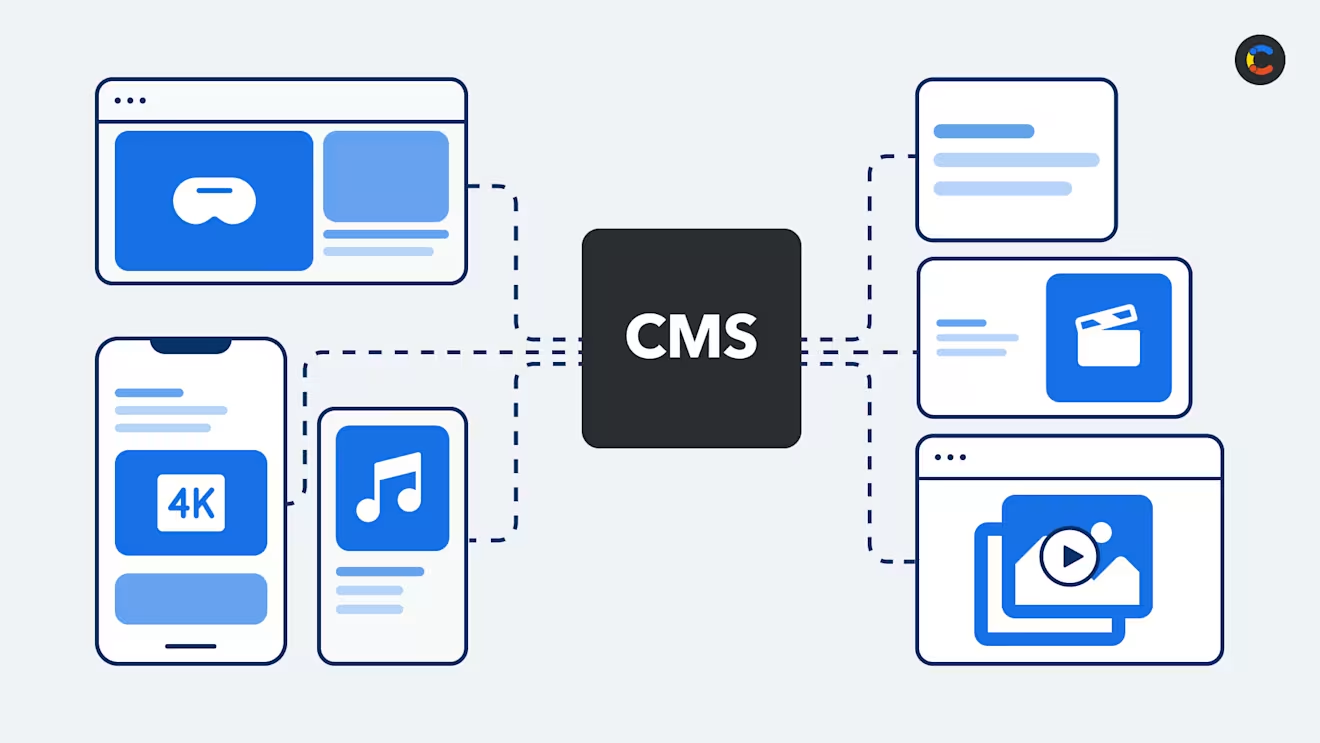
A DXP can serve as the centerpiece to a platform built from numerous services, tools, and widgets, creating a more capable digital user experience.
Previous off-the-shelf CMS platforms locked you into the customer-facing front ends that they provided or supported and the limiting nature of their providers’ vision. A headless CMS platform, like Contentful, gives you the speed to build an initial offering directly on top and the freedom to build out with your own development.
Headless CMS vs. content platforms
While a headless CMS focuses on decoupling content management from frontend presentation, content platforms take it a step further by integrating everything you need to manage the entire content pipeline, from ideation to digital distribution.
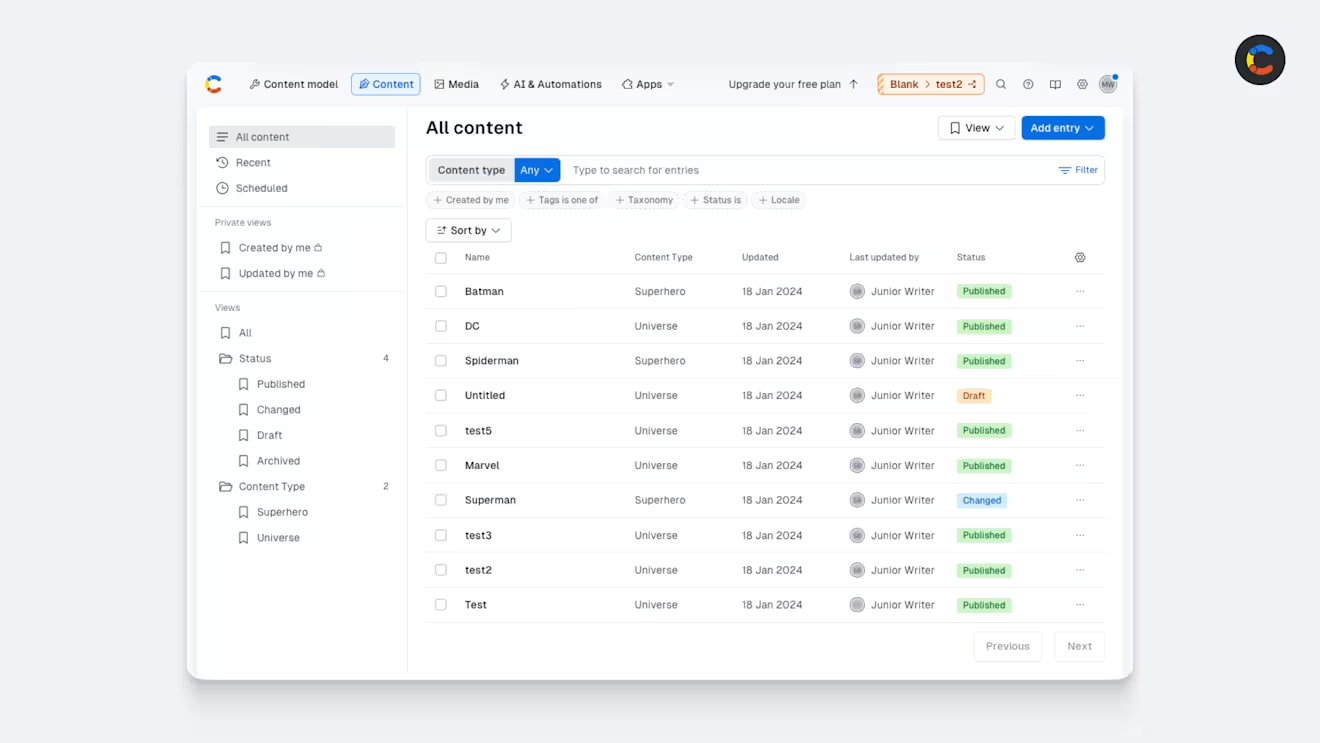
A content platform that's truly composable allows you to create and reuse custom content components and integrations across multiple digital experiences.
For example, you can assemble content blocks and even entire websites from a library of reusable elements as defined by your team and optimized for your use case.
This gives you an efficient, centralized content back end that you can connect to frontend frameworks like React, Svelte, and Vue. You get full control over functionality and look and feel, and you can further streamline development by choosing UI component libraries, SaaS integrations, and other components.
A digital experience platform unifies a headless CMS with everything you need to create and publish
Companies like BigCommerce have learned firsthand how the Contentful digital experience platform helps to move away from cumbersome legacy CMS systems. Our platform evolved beyond a headless CMS and now, as a digital experience platform, unlocks your content and gives developers, marketers, and content creators improved workflows and seamless, engaging experiences across channels.
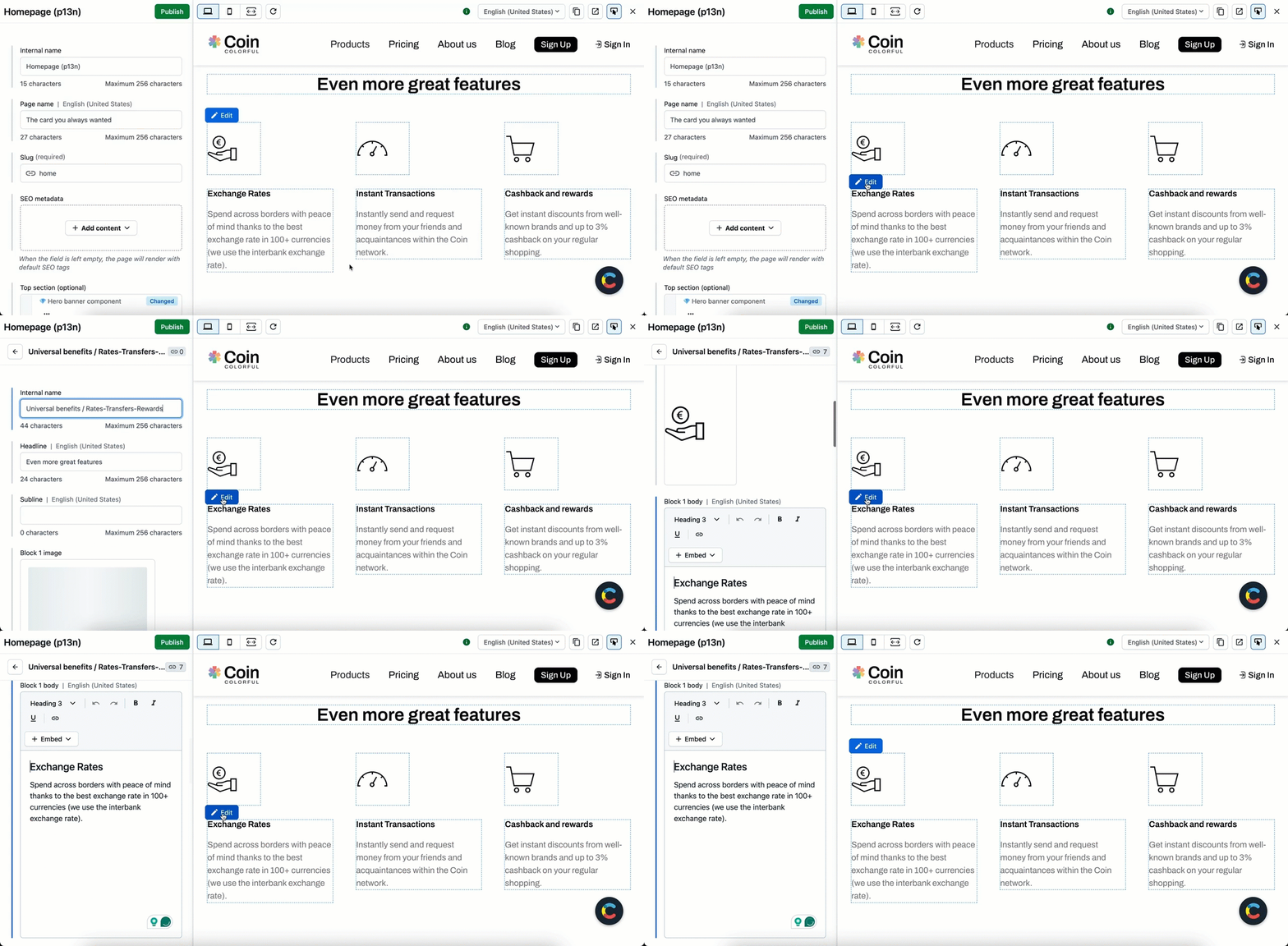
As you edit your content entry, the preview pane automatically updates without needing refreshing.
Teams don’t just create and manage content, they can now analyze performance, personalize experiences, and accelerate production with AI, all within the same platform. For example:
Contentful Analytics gives teams actionable insight into how content performs across channels, enabling fast, data-driven optimization.
Contentful Personalization lets teams build targeted experiences directly in their editorial workflow, with the ability to preview, experiment, and scale personalized journeys.
AI Actions brings automation and intelligence to content creation, enrichment, translation, and governance, reducing manual effort while improving quality and consistency.
These capabilities sit alongside Contentful’s core strengths: flexible content modeling, enterprise-grade governance and workflows, campaign planning, localization, and deep interoperability with marketing, commerce, and data systems. The result is a platform where content is planned, orchestrated, personalized, analyzed, and reused across every digital touchpoint.
Contentful has fully evolved into the composable alternative to monolithic DXPs, offering the power and intelligence of a DXP without the rigidity and bloat.
The task of migrating to a headless CMS vs. a traditional CMS is made easier with our migration guides for Sitecore, Wordpress and Drupal. You can even automate the process of importing your legacy CMS data into your content model, making it future-proof and ready for new channels and audiences.
Keeping flexibility at the forefront is essential. As your business grows, you may find opportunities to reach new audiences and reuse content for new publishing channels — perhaps in ways you haven’t yet envisioned. A headless CMS provides the adaptability to support these changes, ensuring that what’s right for you continues to evolve with you.

Inspiration for your inbox
Subscribe and stay up-to-date on best practices for delivering modern digital experiences.
Meet the authors

Karen is an author, keynote speaker, teacher, and consultant who makes digital systems work better for the people who use them. As Senior Director, Customer Insights & Adoption at Contentful, she works to connect product, marketing, sales, and customer support teams, and advises on content strategy, operations, and management.

Marco is a B2B content creator and product marketer blending technical with creative skills. From the early stages of product ideation to a successful market launch, all the way through to sales enablement, he loves to take products and translate them into clear, relatable messages.
Related articles
How to generate types with cf-content-types-generator
March 25, 2026
Type-safing Contentful API responses with TypeScript
March 12, 2026
Mastering React routing: A guide to routing in React
January 20, 2025

Ready to start building?
Put everything you learned into action. Create and publish your content with Contentful — no credit card required.