Multichannel publishing without the chaos
Published on May 19, 2026


Inspiration for your inbox
Subscribe and stay up-to-date on best practices for delivering modern digital experiences.
In 2026, brands need to be everywhere. Customers expect to be able to engage on websites, mobile apps, in-store displays and kiosks, social media pages, and so on.
However, it is not just about being there; brand presence needs to be consistent across channels: the same information, the same aesthetic, the same tone of voice. In fact, data from Salesforce suggests that almost 80% of customers now expect cross-channel consistency when they engage with brands.
If that consistency breaks down, customers notice and engagement suffers, which is bad news for marketers. As the Great Content Collapse continues to tighten marketing budgets across industries, brands simply can’t afford to spend time and money on content that isn’t converting customers and delivering return on investment (ROI).
The point is, multichannel publishing is a marketing priority. You need to make sure the experiences that you create resonate with your customers wherever they find them.
If you don't have the right multichannel publishing strategy, that isn't easy.
Multichannel publishing defined
Multichannel publishing is the delivery of content across multiple different channels. These are typically digital (websites, apps, social media channels, etc.) but could also include television and radio advertising slots, newspaper ad space, and so on—essentially, anywhere the brand expects to engage with its audience.
Creating content for multichannel ecosystems is not necessarily a significant challenge anymore. There’s an array of content creation and content management technologies available that help writers, designers, and marketers produce content quickly and efficiently at scale.
However, getting content out to those channels and optimizing it is not as straightforward or efficient, and marketers need to understand why.
Understanding the multichannel challenge
Multichannel publishing is not just a question of producing a page for your website, and then rinsing and repeating for your mobile app.
The problem is, channels aren’t (just) content endpoints; each entails its own complex environment of teams, workflows, formats, and technologies. And if those environments aren’t aligned with each other, content ecosystems get crowded and hard to govern.
Ultimately, that results in content chaos as the volume of assets explodes, brand messaging fragments, and customer confusion increases. Here’s how that happens.
Formatting problems
The most visible barrier to smooth multichannel publishing is the technical disparity between channel formats.
Content produced for a desktop site, for example, will need to be reformatted for presentation on other channels. Brand teams can copy and paste between channel frontends, but that requires tedious manual effort and increases the risk of human error, content duplication, and message fragmentation.
Publishing in multiple formats also often requires developer hand-holding, if nothing else to help content teams handle the inevitable coding complications that arise when copy-pasting vast amounts of text between environments.
Operational complexity
Bringing multiple front-ends into the mix means wrangling more team members, more tools, and more ways of working. Each channel team in the ecosystem requires a degree of autonomy in order to optimize content output, but must balance that with the needs of the core brand identity.
That operational sprawl and complexity puts pressure on content workflows (and team members) in the form of dependencies and bottlenecks. Those issues slow time to market, and undermine associated (important) content optimization processes such as personalization, translation, and localization.
Silos and data flow
Multichannel content operations are extremely vulnerable to siloing, which is when critical content, data, insight, and expertise get hidden away in teams’ local drives, or even inside employees’ heads.
Without a means to ensure data is visible and can flow freely across the entire digital ecosystem, the risk of content fragmentation grows dramatically — along with the associated potential for content duplication and inconsistency which inevitably hurt brand identity and engagement.
Personalization at scale
Multichannel challenges don’t always originate internally. Users’ personal tastes and preferences when engaging on one channel may differ significantly from other channels; scrolling through a long block of text on a desktop site is a different experience to scrolling on a tiny cellphone touchscreen — thanks to hardcoded formatting limitations and other technical red lines.
Behavioral differences make multichannel personalization much more challenging. And brands that don’t take them into account jeopardize engagement and struggle to generate ROI.
Multichannel vs. omnichannel
We need to make a distinction between multichannel and omnichannel. The two terms are used in close proximity but they mean different things.
Multichannel is about orchestration and the logistics behind publishing content on different channels.
Omnichannel is about how audiences experience multichannel content. More specifically, it’s about making that experience continuous across channels.
In omnichannel marketing, channels aren’t separate destinations but are all part of the same connected journey for your customers. For example, customers can browse products on a brand’s website, and then see those products appear in a “Recently viewed” tab in their app.
Not all multichannel ecosystems are omnichannel, but all omnichannel ecosystems are necessarily multichannel. The challenge for brands remains the same: They need a way to remove cross-channel friction and ensure customer experiences are seamless, engaging, and optimized.
Multichannel publishing is foundational to that goal.
Why content platforms matter for multichannel publishing
Traditional, monolithic content platforms don’t offer the kind of operational flexibility that brands need to deal with multichannel challenges.
That’s because these platforms lock marketers into vendor-provider functionality, with no extensibility or adaptability. They also use page-based content management systems (CMSes) that tie content to individual web pages and force marketers to create new content from scratch, or tediously copy and paste, if they want to move it to a new channel.
And to add channels to a monolithic ecosystem, brands need to bolt on new frontends, and deal with all the operational burdens we outlined above. Once again, content chaos looms: Workflows slow down, and silos emerge, and it’s more difficult to adapt content to the specific requirements of each channel and its audience.
The good news is, there’s another way to do things.
The "create once, publish anywhere" solution
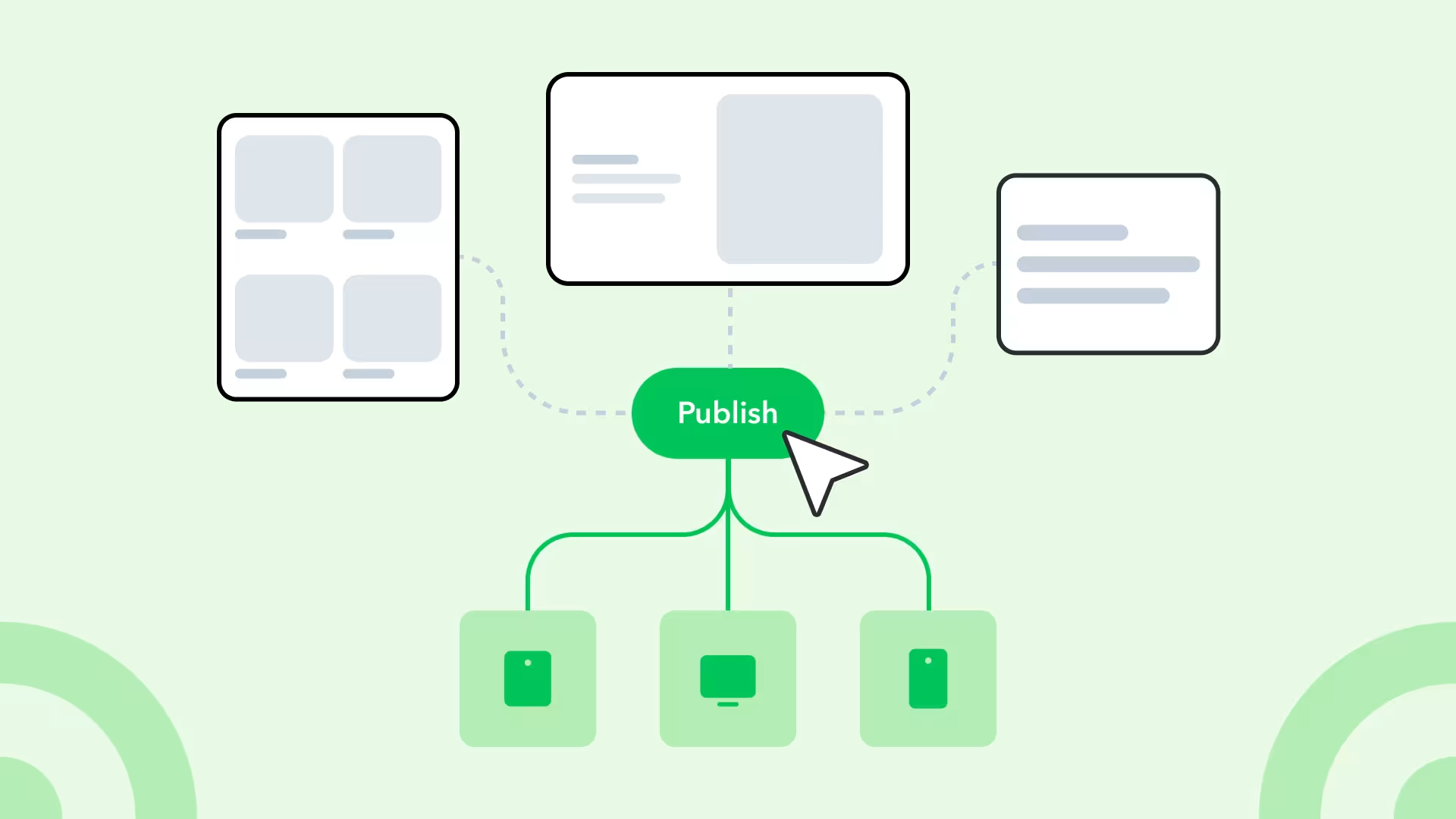
Composable architecture allows brands to sidestep monolithic CMS limitations, and implement “create once, publish anywhere” digital ecosystems.
In composable content platforms, digital content assets are stored in a central database. Application programming interfaces (APIs) support the free flow of data and content across different apps and services within the tech stack and ensure delivery to the presentation layer without the risk of channel-specific formatting errors or coding complications.
Composable architecture makes no assumptions about what the channel frontends should look like, or how content should be presented on channel frontends; brands are free to design and build exactly the systems and workflows they need to fit the channels they use.
The same goes for content experiences. With no vendor-imposed limitations on content presentation, brands can structure their content any way they want — which means experiences can flex and adapt to any channel context.
And with the central database serving as a single source of truth, brands can closely control how content is presented on specific channels, protecting brand voice, identity, and messaging. Essentially, channel teams are always using the same core content, adapted for their channel environment, to create experiences.
Multichannel publishing in action
What does an effective multichannel publishing strategy look like? How do brands manage and deliver content across channels in the real world?
Chances are you’ve engaged with a multichannel ecosystem at your local supermarket. Lots of supermarket brands maintain active desktop sites and mobile app channels — and they understand the differences in the way that their customers engage with content on both channels.
For example, a supermarket might decide to optimize its website for the experiences of users browsing on personal desktop computers. These users typically browse in-store products, compare prices, or use the supermarket’s home delivery service to order and purchase their weekly groceries.
Users of the supermarket’s mobile app have very different needs and preferences. These users typically open the app in-store, checking the latest offers, scanning their digital loyalty cards at checkout, and activating digital vouchers.
The customers don’t engage with the supermarket’s channels in the same way. To reflect that, it delivers shorter, more actionable content experiences on its app, and deeper, more detailed experiences on its website.
In this context, the supermarket's core content — logos, product information, prices, and so on — remains consistent, protecting factual accuracy and brand identity. At the same time, the supermarket delivers highly relevant, channel-specific experiences for end users.
Building a multichannel publishing strategy
The most effective multichannel strategies are built around flexible, adaptable content platforms that empower brands to simplify and streamline, without losing control of governance.
Here’s what you should be thinking about as you develop your strategy.
Understand how customers engage
To make content work for audiences across channels, you’ll need to understand how users engage with and move between channels. Leverage analytics to reveal where users browse, where they convert, and which channels generate the strongest engagement. Those insights help marketing teams understand how each channel fits into the wider customer journey, and create content that works.
Map the customer journey
Once user behavior patterns become clear, you should map the customer journey. Identify the moments where customers discover and act on content on specific channels, and work out why they’re doing that. Create a customer journey map that takes in all the channels within your ecosystem to map that process visually.
Align channels to user intent
Journey maps are the foundation for aligning channels with user intent. Brands may find that their mobile experiences need to be more aligned with concise, task-focused content that helps users act quickly, while desktop experiences support more depth and exploration. The objective shouldn’t be to get content out to multiple channels, but to make sure each channel delivers content that feels useful in that specific moment.
Model content for reuse and flexibility
To support channel flexibility, content experiences need to become adaptable to context; create once, publish anywhere. Leveraging composability, brands can model content as structured, modular components that can be assembled differently for specific channels. Structured content can be reused anywhere in the digital ecosystem, meaning that marketers do not need to recreate content from scratch for each new channel.
Balance control and autonomy across teams
Content teams for specific channels need to be able to optimize experiences for their audiences. At the same time, the brand should retain robust governance to protect brand consistency, quality, and identity. Adopt a content platform that balances centralized control with channel autonomy — so that marketing teams can operate with confidence and creativity, without creating silos or sprawling, unmanageable content libraries.
Test, learn, and optimize
Customer behavior changes, platforms evolve, and new touchpoints continue to emerge. To keep pace with all those trends, every published content experience on every channel should be part of an ongoing process of refinement. Marketers will need to collect and analyze performance data to understand what’s working, adapt content to new patterns of customer engagement, and continuously improve how content performs across every channel.
How Contentful makes multichannel ecosystems better
To make multichannel content work for your brand, without creating content chaos, you need more than a “multichannel publishing CMS” and a set of tools.
You’ll need to build a flexible, composable content tech stack that simplifies operational complexity, and evolves with both your market and your audience.
Contentful understands that need, and we’ve pulled all the advantages of composability into our digital experience platform (DXP), empowering marketing teams to create and deliver content experiences tailored to their target audiences, across every device and touchpoint.
Those advantages include component-level control of digital assets, a range of AI-powered automations that eliminate manual content management tasks, and built-in tools for personalization, and translation and localization. The API-first extensibility of the Contentful platform also means that you’ll be able to integrate any multichannel publishing software tools you need to realize your omnichannel marketing goals.
Continuous optimization at scale
Multichannel success isn’t just about the impact of new tech; we want our platform to help you build the value of your multichannel ecosystem over time, as your brand grows.
Visibility is key to that objective. Our integrated analytics platform provides content performance data in real time, across channels. Where content underperforms, marketers can leverage built-in experimentation tools, including no-code A/B testing, to quickly assess content variants, and get an optimized experience back out to the relevant channel.
In other words, Contentful not only makes multichannel publishing easier, but makes successful multichannel publishing sustainable at scale, ensuring brands stay in control of their content wherever they choose to publish it.
Contentful supports multichannel publishing for the world’s biggest brands: Explore our latest platform features or speak with our sales team to arrange a demo.

Inspiration for your inbox
Subscribe and stay up-to-date on best practices for delivering modern digital experiences.
Meet the authors

Thomas leads the Enterprise Solution Engineering Team in EMEA. With over a decade of experience in Marketing Technology, he has partnered with a wide range of customers to enhance their digital presence, streamline customer journeys, and drive sustainable growth through online engagement.
Related articles
Multilingual content marketing that drives engagement in every market
March 18, 2026
Three GEO playbooks: How to prepare your content for generative search
June 17, 2025
Three personalization strategies to get more value from your existing traffic
September 4, 2026

Ready to start building?
Put everything you learned into action. Create and publish your content with Contentful — no credit card required.