Introducing Palmata by Contentful: A new AI discovery platform for the age of answer engines
Published on June 23, 2026


Inspiration for your inbox
Subscribe and stay up-to-date on best practices for delivering modern digital experiences.
Your AI reputation precedes you.
Before a buyer visits your website, an answer engine may already be their first source of information about your company: explaining your offerings, comparing you with competitors, and framing how your brand is perceived.
That shift creates a new challenge for marketing, content, SEO, and web teams: understanding how answer engines interpret your business and what information they rely on to generate responses.
Today, we’re introducing Palmata by Contentful, a content decision system for AI discovery that enables organizations to understand, measure, and improve their presence in answer engines.
Palmata turns AI discovery risk into a credible plan for growth by revealing why AI-generated answers appear the way they do, prioritizing what content to change, and modeling the potential impact of recommended actions.
AI discovery is changing how customers evaluate brands
For more than two decades, digital teams have optimized content for traditional search engines. SEO gave organizations a practical framework for improving visibility, attracting traffic, and helping customers find relevant information. That work remains essential.
But AI-powered search and answer engines are introducing a new layer of discovery. Customers are asking tools such as ChatGPT, Gemini, Claude, Perplexity, and other AI experiences to explain categories, compare companies, summarize products, and recommend solutions.
Those responses can become part of a prospect’s first impression before they visit a product page, read owned content, or speak with sales.
Content now serves two audiences: people and answer engines. Customers still consume content directly, but answer engines increasingly use it as source material to explain categories, compare companies, and recommend solutions.
As a result, AI-generated answers can shape brand perception before a prospect reaches a company’s owned channels. And that perception may not always be positive, whether it stems from outdated messaging that doesn't reflect the current reality of your brand or from talking points seeded by competitors.

Visibility is only the starting point
As interest in AI discovery grows, many tools now measure AI visibility. They show whether a brand appears in AI-generated answers, how often it’s cited, and how its share of voice compares with competitors across a defined set of prompts.
Those metrics are useful, but they answer only one question: Are we showing up?
They don’t provide the answer teams need to act with confidence: How are we being represented? Why are answer engines describing us this way? What should we change first?
A visibility report can show that a competitor appears more often, that your brand is missing from an important category conversation, or that your share of voice is lower than expected. But it may not explain whether the issue is unclear positioning, missing evidence, weak category coverage, outdated content, or a gap between what your company says and what answer engines can verify.
Marketing teams need a practical way to connect AI discovery research to content decisions. For teams focused on answer engine optimization (AEO), that means moving beyond citation counts and share-of-voice metrics toward a clearer view of how answer engines interpret the brand and which actions to prioritize next.
Palmata was built to close that gap.
Meet Palmata
At the core of Palmata is a proprietary deep research agent that analyzes your company, competitors, category, audiences, and broader digital landscape to reveal how your brand is represented in AI discovery.
Palmata helps teams understand which parts of their content answer engines may be drawing from, identify the opportunities that matter most, and prioritize the actions most likely to improve their AI reputation.
The result is a clearer path from risk to action: one grounded in research, prioritized recommendations, and a better view of how content changes may influence AI reputation over time.
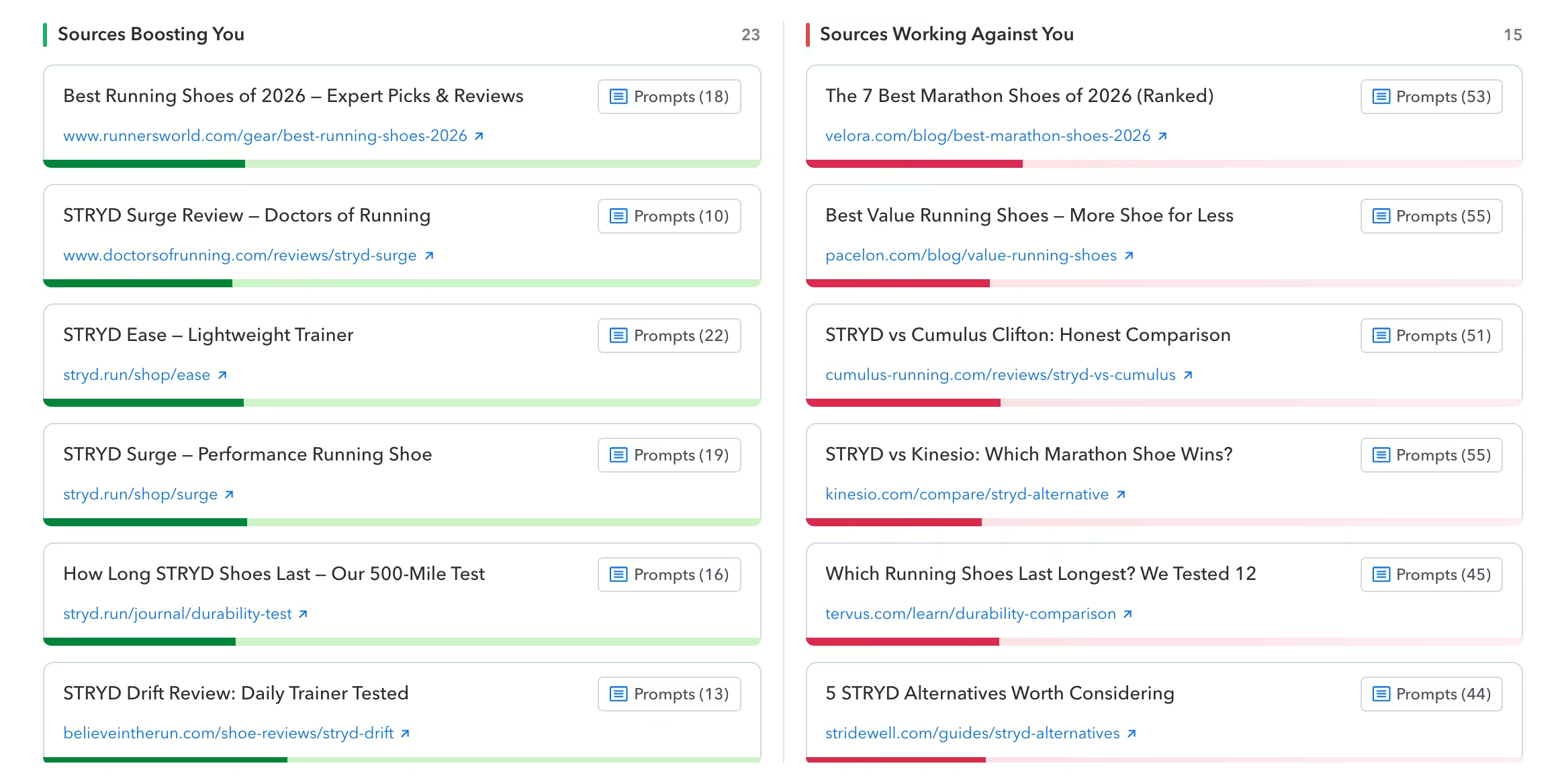
The Sources view shows you which pieces of content are shaping the story about you: the ones helping you, the ones working against you, and the ones the engine read but didn’t use.
Four capabilities designed for AI discovery
Palmata turns insights into action through four core capabilities: Steering Control, Adaptive Deep Research, Recommended Actions, and Simulated Impact.
Steering Control lets teams direct research toward business priorities, including specific brands, products, competitors, audiences, segments, regions, and topics. Research stays connected to real business goals, not generic benchmarks.
Adaptive Deep Research continuously develops context around your business, competitors, category, audiences, and digital landscape, helping teams see what AI-generated answers reflect, miss, or misunderstand about their brand.
Recommended Actions translates research into prioritized actions: quick wins and strategic opportunities most likely to improve how a brand is represented in AI-generated answers.
Simulated Impact models how recommended actions may influence AI reputation, so organizations can compare opportunities, understand tradeoffs, and prioritize investments before committing time, budget, and resources.
Together, these capabilities shift the focus from whether a brand appears in AI-generated answers to how it’s represented, what that representation means, and what actions to take next.
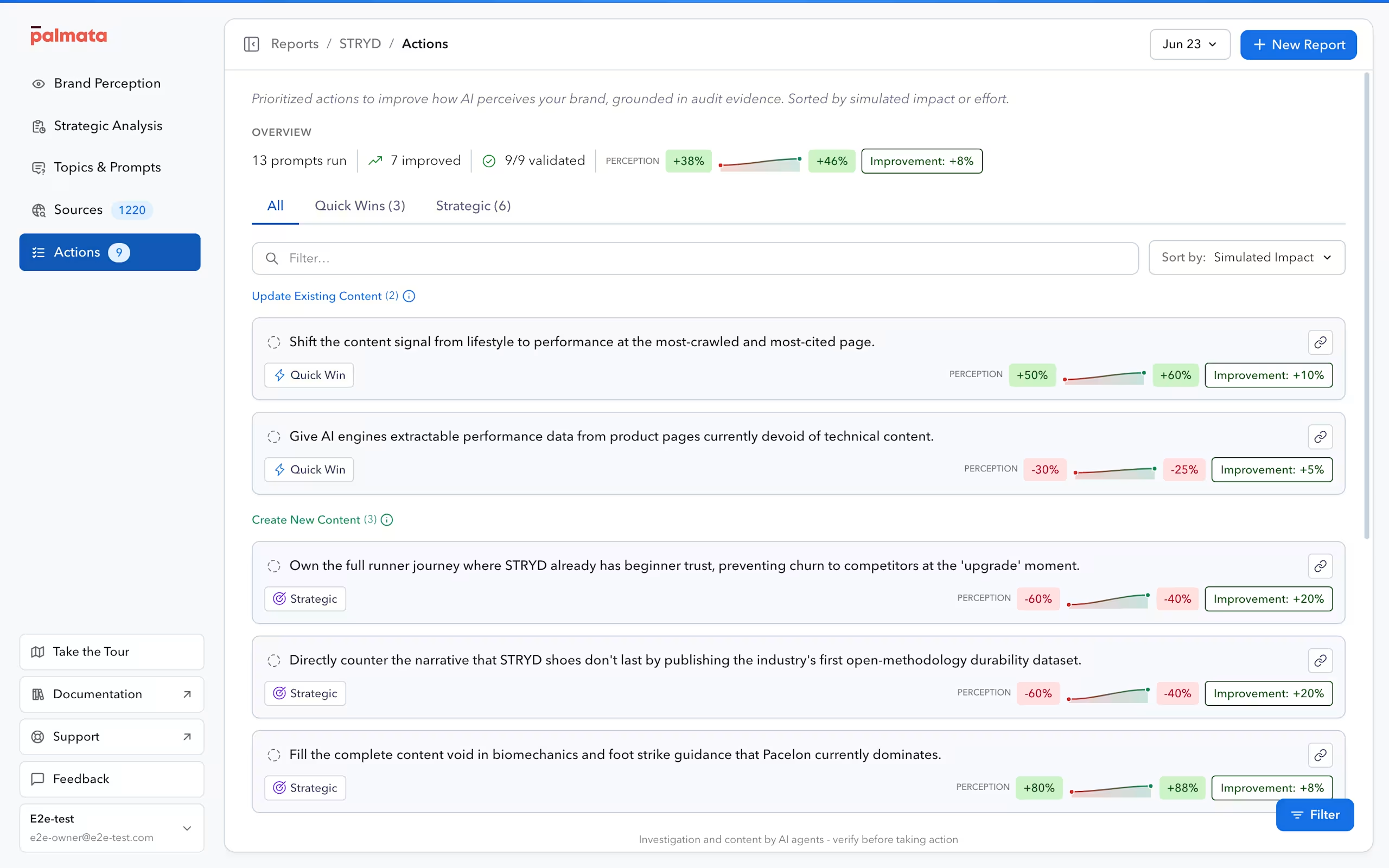
Actions is the playbook with a ranked list of concrete moves, each one tied to the buyer questions it would change, each one tested before it reaches you.
Powered by Sounder Discovery Agent
AI-generated answers draw on a broad set of signals, not a single page, keyword, ranking factor, or prompt. That’s why organizations need a deeper understanding of the context surrounding their business, competitors, category, audiences, and digital landscape.
Sounder, Palmata’s discovery agent, is designed to make those connections more transparent. It examines the sources and surrounding information that may affect how brands are represented in AI-generated answers, creating a stronger foundation for content planning, prioritization, and optimization.
An MCP server to bring insights into your tools
Palmata also offers a dedicated model context protocol (MCP) server that gives writers, editors, and marketers access to Palmata’s research directly inside their AI-assisted content workflow.
MCP is an open standard that helps AI systems, especially large language models (LLMs), interact with external tools, systems, and data sources.
Using the Palmata MCP server, teams are able to plan, create, and optimize their content without having to rebuild context from scratch.
Why AI reputation matters for content strategy
Your brand’s reputation has always been shaped by what customers read, hear, and experience. Answer engines add another layer to that reality.
When an answer engine summarizes your company, compares you with competitors, or recommends a solution in your category, it can become part of how a customer understands your brand before they interact with your website, sales team, or owned content.
That makes AI reputation a content strategy issue. Organizations need content that communicates clearly to people while also providing the evidence, consistency, and context that answer engines use to represent the brand accurately.
This doesn’t mean creating more content for its own sake. It means understanding what content to change, why it matters, and which opportunities deserve attention first.

Brand Perception is the first thing you see when a report finishes. It’s built to answer one question immediately: how's your brand doing?
A natural extension of Contentful’s vision
Contentful was built on the belief that content is the foundation of every digital experience. That hasn’t changed. What’s changed is where those experiences begin.
As answer engines play a larger role in how people discover, evaluate, and compare companies, content strategy has to extend beyond content creation and delivery. Organizations need to understand how their content is interpreted, how their brand is represented, and what actions can improve performance across emerging discovery channels.
Palmata operates independently from the Contentful Platform, but it aligns closely with our vision for the future of digital experiences. Content strategy now has to account for answer engines as part of how people discover, evaluate, and make decisions about brands. Palmata helps teams understand that environment more clearly and make better decisions about where their content should go next.
Get started with Palmata
AI discovery is changing how brands are found, compared, and understood. Palmata by Contentful gives teams a practical way to see what is happening, decide what to change, and act with greater confidence.
Palmata is generally available today, and marketers can run their first Palmata report for free.

Inspiration for your inbox
Subscribe and stay up-to-date on best practices for delivering modern digital experiences.
Meet the authors

Jason McGhee is a technical leader and engineer focused on AI, agents, and human-centric product design. He joined Contentful through its acquisition of Writ, where he was CTO and co-founder, and now leads strategic initiatives.
Related articles

Beyond the checkbox: Building trust through compliance, resilience, and continuous improvement
September 4, 2025
The future of digital experiences are AI-powered, composable, and built to win
March 31, 2025

AI at scale: Teams empowered to move faster, without compromise
October 1, 2025

Ready to start building?
Put everything you learned into action. Create and publish your content with Contentful — no credit card required.