What's a painted door test, and why should you use one?
Published on March 4, 2026


Inspiration for your inbox
Subscribe and stay up-to-date on best practices for delivering modern digital experiences.
In digital marketing, understanding what customers want from a content experience can never be an exact science — but sometimes that’s a good thing. Let me explain.
Creating content is time and cost consuming, which is why brands run tests and experiments to ensure the assets they invest in have a meaningful impact on the experiences they offer customers.
However, content testing and experimentation are not risk-free, especially for organizations carefully navigating the Great Content Collapse. Even with robust analytics data and research, there can still be significant uncertainty around whether a new content feature will be a hit with your target audience, or a waste of time that fails to deliver return on investment (ROI).
What if there were a way to remove that risk, or at least reduce it enough to justify greenlighting a content development project and optimizing it later?
With the painted door test, there is.
What is a painted door test?
If you’ve ever seen a Roadrunner cartoon, you’ve probably seen a crude version of a painted door test.
In the cartoons, Wile E. Coyote literally paints a fake door on a wall and labels it something along the lines of “Free birdseed inside!” in the hope that it distracts the speeding roadrunner from the road, and lures it into a trap.
The coyote is testing the roadrunner’s behavior for a very low opportunity cost: He doesn’t have to build anything beyond the door or purchase any seeds. The roadrunner is passing by anyway and will either stop to inspect the door or ignore it.
The coyote’s painted door always backfires on him, but the real problem is not that he fails; it is that he is not interested in learning anything about the roadrunner.
Fortunately, digital marketers are smarter.
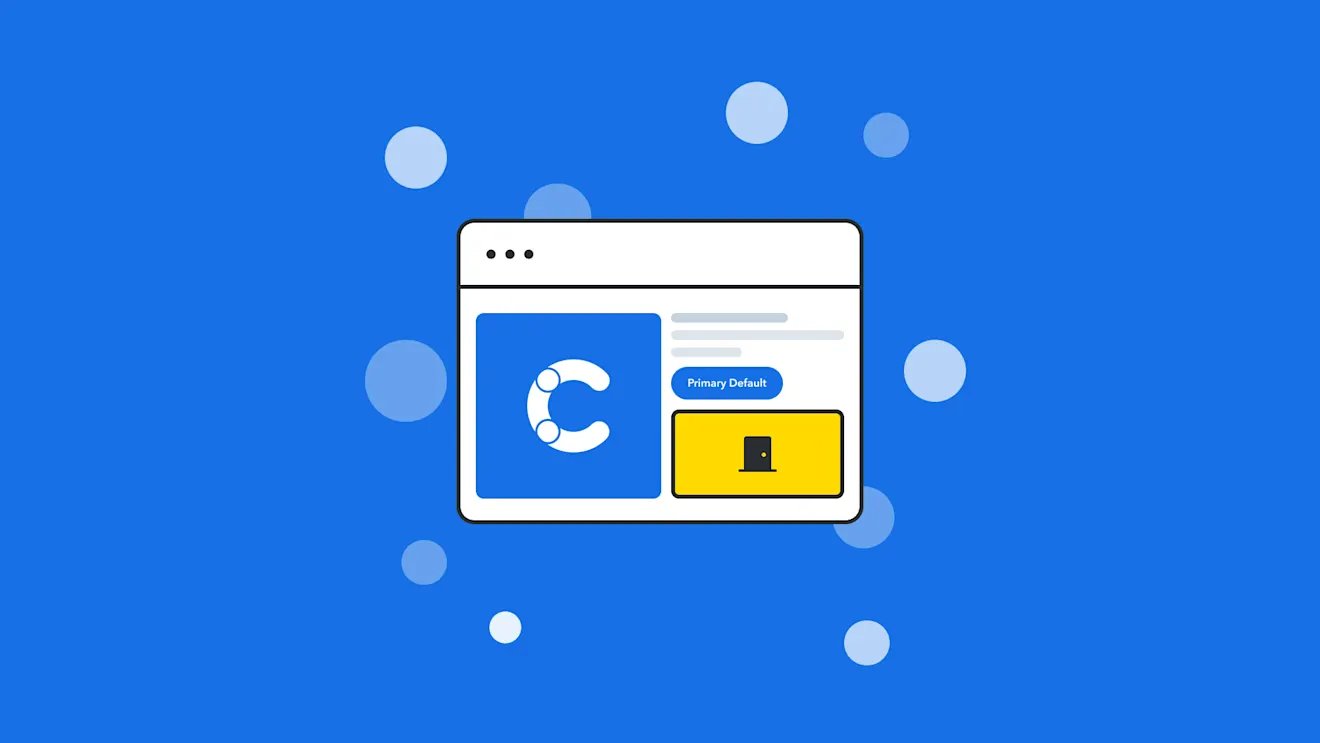
In digital marketing, a painted door test is the addition of a non-functional feature to a digital content experience in order to get a strong indication of user interest without spending time, money, and resources developing the feature itself.
Your painted door might be a pop-up, a banner, or an entry in an app menu; anything that creates the illusion of a new feature or service. When users click the “door,” they’re redirected to placeholder content with a “feature coming soon” message or something similar.
And, on the other side of the screen, marketers are tracking behavior and using that data to establish initial interest and demand from the user base. It’s a way of de-risking internal projects and proposals before anyone needs to start budgeting, coding, or taking on other operational heavy lifting.
What makes the painted door test different?
A painted door test (sometimes referred to as a fake door test) differs from other types of content tests and experiments because it’s about speculation rather than optimization. The focus is firmly on user demand, rather than on the relative quality of competing content variations and analysis of multiple metrics.
In a typical A/B test, for example, marketers set up two variations of a content element — say, a call-to-action (CTA) button with two different wordings. One half of users sees the first variant exclusively, while the other half sees the second, and the brand tracks which version results in a higher click-through rate.
In a painted door test, there doesn’t have to be any variation. Every user may see the same CTA and either click it or ignore it. That’s because the goal isn’t to optimize the copy or design, but to establish potential demand and how the feature might reshape the overall content experience.
But there’s also no reason to stop at demand validation. Brands can take the opportunity to track what users do after the painted door. For example, does introducing a CTA change the user journey in any meaningful way? A CTA such as “Check out our new project management offering” might lead some users to explore products and services more than those who didn’t click — an insight that adds more value to the painted door.
These are all low-cost data points that, while not scientifically precise, offer a strong indication of user-desired features, and how a brand could and should develop its content experience in a way that sustains engagement.
Why use a painted door test?
We’ve talked about the low opportunity cost, and the potential return of “establishing demand”, but what does that look like in practice? The painted door test helps brands to:
Validate ideas for new products or campaigns with data-backed insight.
De-risk decision-making and investments.
Explore brand appeal to new audience segments.
Understand user expectations.
Establish priority for new feature ideas in the pipeline.
Gather deeper insight by collecting post-test feedback from users.
Avoiding painted door problems
So is the painted door test a no-brainer? Sort of.
The downside of mocking-up a feature that doesn’t yet exist is that users who click on it can easily become frustrated. Given you’re not actually delivering the feature you’re signalling, you need to be careful about how that affects the content experience, and user trust.
In practice, that means avoiding buttons that do nothing or that fail to adequately explain the proposed feature or functionality being tested. For example, if a user clicks on the “project management” CTA mentioned earlier, they should arrive on a page that explains what’s happening and which doesn’t leave them feeling misled.
A message such as “Our project management feature is coming soon — sign up here for updates” helps manage expectations, not to mention providing an opt-in list of interested users that you can market to when the feature is ready. Alternatively, the page could invite users to share feedback through a short survey, translating their interaction into more engagement and more insight without leaving anyone empty-handed.
How to conduct a painted door test
No technical expertise or extensive planning should be required to run a painted door test. In most cases, it can be set up by following these straightforward steps.
Develop a hypothesis
Start by defining what you’re trying to learn with a hypothesis, which is a prediction about the relationship between two variables: “If X, then Y.” In the case of a painted door test, this doesn’t need to be complex; remember the goal is to establish demand or interest, not to optimize design details.
For example, if you’re testing your CTA for the project management feature, you don’t need to hypothesize about whether button color will affect conversion. A simple statement such as “We believe users are interested in a project management feature” will do.
Set a threshold
You’re not aiming for detailed data from the painted door test, but you need to establish what a meaningful result looks like. In other words, how many clicks on the painted door will you accept as indicative of user intent?
That decision-making threshold will depend on factors unique to your organization, such as business objectives and content strategy. With those factors in mind, set a percentage threshold that allows you to act confidently on the results and make the business case for your new feature.
Create the painted door
Ideally, marketers should be able to create painted door tests quickly using the tools available in their content management system (CMS), rather than relying on developers or designers to manage backend functionality.
The flexibility of your content platform matters here. Nontechnical team members should be able to access the CMS easily and create the required content assets without friction or reliance on developers.
CMS flexibility is also an advantage for nudging test accuracy. For example, you could split the visibility of your painted door by audience because you expect developers to be less interested in clicking a “project management” CTA than marketers. Similarly, you might want to split your test results by audience so that you can determine whether one group clicked more often than another.
Track user behavior
Once the painted door is live, you’ll need to track how users interact with it, including how many click through or take the desired action.
Beyond that initial engagement, it’s also useful to observe and record what happens afterward. For example: Do users explore more content or exit the experience? Brands that are able to conduct post-test surveys and gather user feedback can add further context to their painted door as part of the wider content journey.
Analyze results
Analyze the results of the test in relation to the thresholds you defined. Whatever the outcome, you’ll have evidence to support your decision-making. The faster those insights can be accessed and interpreted, the more valuable they become.
How Contentful makes painted doors real
Contentful gives marketers everything they need to devise and launch painted door tests autonomously from a single interface. Content is structured, modular, and centralized, which means that you can move quickly to assemble and run as many painted doors you want to, and tailor them to specific audience segments.
But the Contentful digital experience platform (DXP) empowers brands to do more with content and content experiences by providing a composable system of content testing, validation, and production at scale.
In Contentful, the results of your painted door tests power content creation workflows, helping marketers transform speculative ideas into live production experiences seamlessly, without the hassle of having to jump between different platforms or coordinate between teams. That native functionality includes content testing and experimentation, personalization, translation and localization, and agentic analytics — all available at the click of a button and supported by an entirely composable content tech stack.
Beyond the painted door
The irony of the painted door is that, with the right technology in place, there can be something valuable behind it.
For marketers, it’s data that helps build a business case. For developers, it’s time saved by avoiding work on features that won’t be used. And for decision-makers, it’s an early step toward ensuring ROI.
The Contentful DXP helps brands look beyond the painted door by making its results real — with tools that empower both technical and non-technical teams, and that strengthen every aspect of content operations.
Ready to build your painted door? You can get started with a tour of the Contentful platform: Discover the advantages of structured content modelling, learn how Contentful enables marketers to work autonomously, or connect with our sales team to arrange a demo.

Inspiration for your inbox
Subscribe and stay up-to-date on best practices for delivering modern digital experiences.
Meet the authors

Thomas leads the Commercial Solution Engineering team in EMEA. With over a decade of experience in Marketing Technology, he has partnered with a wide range of customers to enhance their digital presence, streamline customer journeys, and drive sustainable growth through online engagement.
Related articles

Becoming a Contentful customer: Why partnership matters more than price
March 10, 2026
Content orchestration: Paving the way for dynamic digital experiences
December 15, 2025

Trinny London: Personalizing everything from makeup to content
August 21, 2024