When more content stops creating more impact
Published on May 27, 2026



Inspiration for your inbox
Subscribe and stay up-to-date on best practices for delivering modern digital experiences.
Content teams are under pressure from every direction. Buyers are harder to reach, channels keep shifting, and AI has made content production faster than ever. For many teams, the instinct is to respond with more: more campaigns, more assets, more posts, more formats.
That instinct is understandable, but it is also reaching its limit.
In a recent conversation with Omar Akhtar, founder and principal analyst of Benchmarker, we explored what high-performing B2B SaaS content teams are doing differently. The discussion was grounded in research across 320+ B2B SaaS companies in North America, and one finding stood out: teams exceeding revenue targets are not dramatically out-publishing their peers. Once teams reach a consistent baseline of output, performance depends on other factors.
Those factors came through clearly in the data and the conversation: defensibility, distribution, and differentiation.
For content leaders, that creates a useful reset. The next stage of content strategy will reward teams that can explain why their work matters, get it in front of the right audiences, and create ideas that feel distinct enough to earn attention.
The content volume playbook is losing power
For years, “publish more” has been one of the most common answers to a content problem.
Need more awareness? Add more thought leadership.
Need more leads? Create another gated asset.
Need more sales support? Build another one-pager.
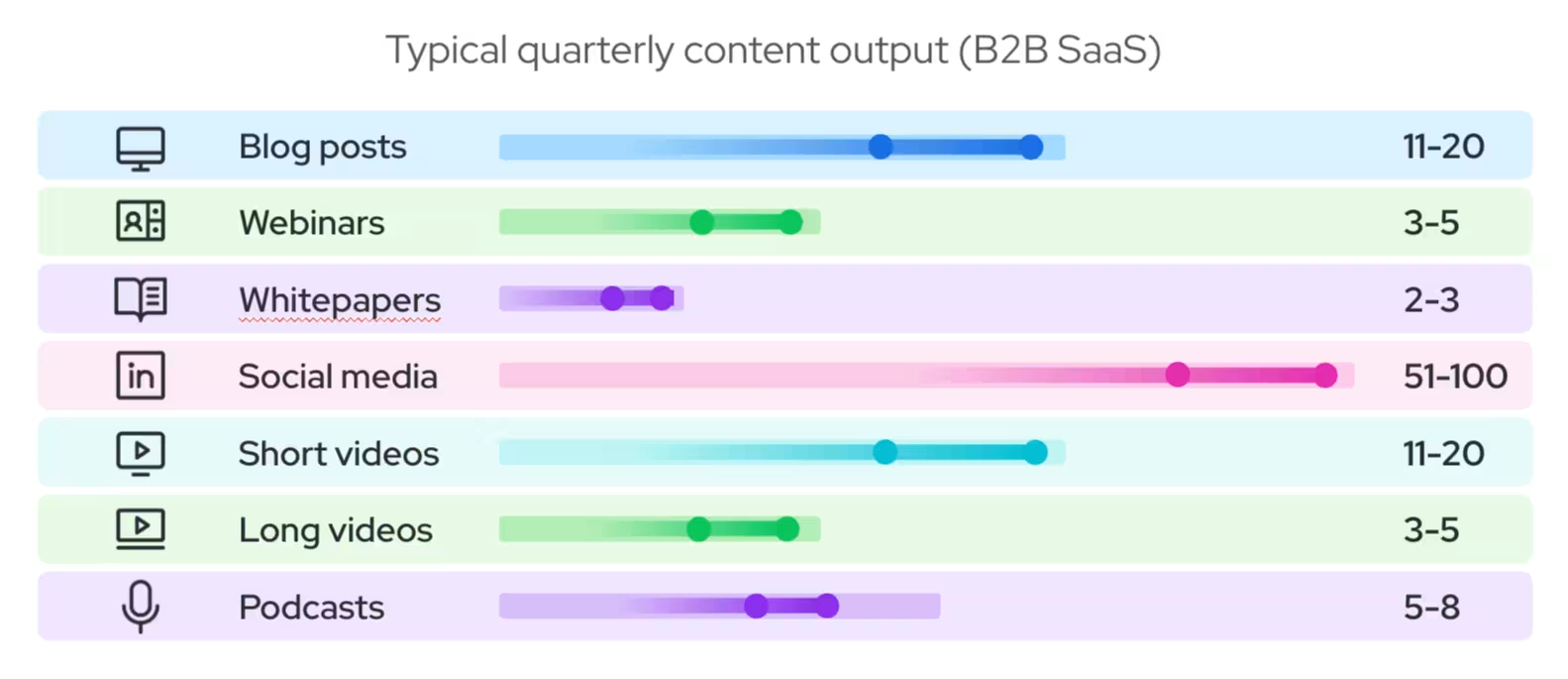
There is still a real need for consistency. Benchmarker’s research found that lower-performing companies tend to produce below the median, which suggests that teams need to meet a baseline level of publishing to stay visible and useful.
The ceiling appears once teams cross that baseline. More output alone does not separate high performers from everyone else.
Omar described this as reaching “max content.” Audiences can only absorb so much from any one brand, person, or channel. AI has lowered the barrier to production, but it has not expanded the amount of attention available. In some cases, it has made attention harder to earn by increasing the volume of similar-sounding content.
“We’ve reached max content,” Omar said. “Everybody is competing for eyeballs. Brands have to be very careful about what they put out there, and they have to be choosy.”
That changes the strategic question for content teams. The strongest teams are becoming more selective about what they create, more intentional about where it goes, and more disciplined about how they evaluate success.
Defensibility starts with a shared definition of success
Content teams have become excellent at production. We know how to build editorial calendars, support launches, create campaign assets, and use AI to move faster throughout our workflow.
The harder challenge is proving that the work is making a meaningful difference.
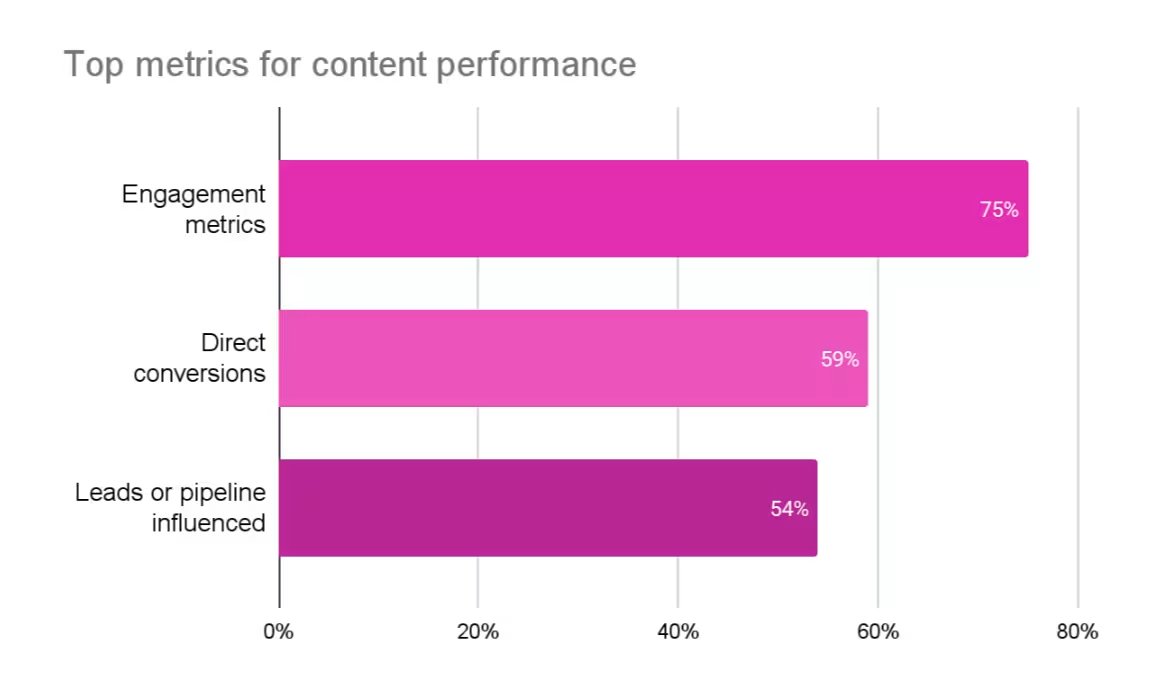
Many teams still rely heavily on engagement metrics: views, clicks, downloads, shares, and form fills. These metrics have value. They help us understand whether content is reaching people and whether an audience is responding. The issue is that, on their own, they rarely tell the full story.
A defensible content strategy connects activity to business priorities.
For some organizations, that connection may be pipeline or revenue. For others, it may be an agreed proxy tied to the company’s current goals. Omar made an important point in the webinar: the specific measure matters less than organizational alignment around what the measure means.
“Defensibility means you’re showing the impact of something,” he said. “A lot of times, it doesn’t really matter what that something is, as long as everybody is aligned on it and you have a method for doing it.”
That is a practical and encouraging idea. Especially given most marketing teams do not have perfect attribution. Data is often fragmented, journeys are nonlinear, and content influence can be difficult to isolate.A strong measurement practice does not require teams to pretend those challenges do not exist. It requires a consistent way to evaluate what content is intended to do and whether it is helping.
That practice changes the conversation internally.
Instead of reporting only that an asset launched or reached a certain number of views, content teams can explain why they created it for whom, how it supported a business priority, and what they learned from its performance.
That kind of defensibility builds credibility. It gives content teams a stronger voice in planning conversations, helps leaders make better investment decisions, and positions content as a strategic function with measurable influence.
Distribution deserves a seat at the strategy table
Publishing is an important milestone, but it rarely determines whether content succeeds.
A strong asset can still underperform when distribution is treated as a handoff. Content teams create the report, article, webinar, or video, then pass it to demand generation, social, web, or partner teams with the hope that it will reach the intended audience.
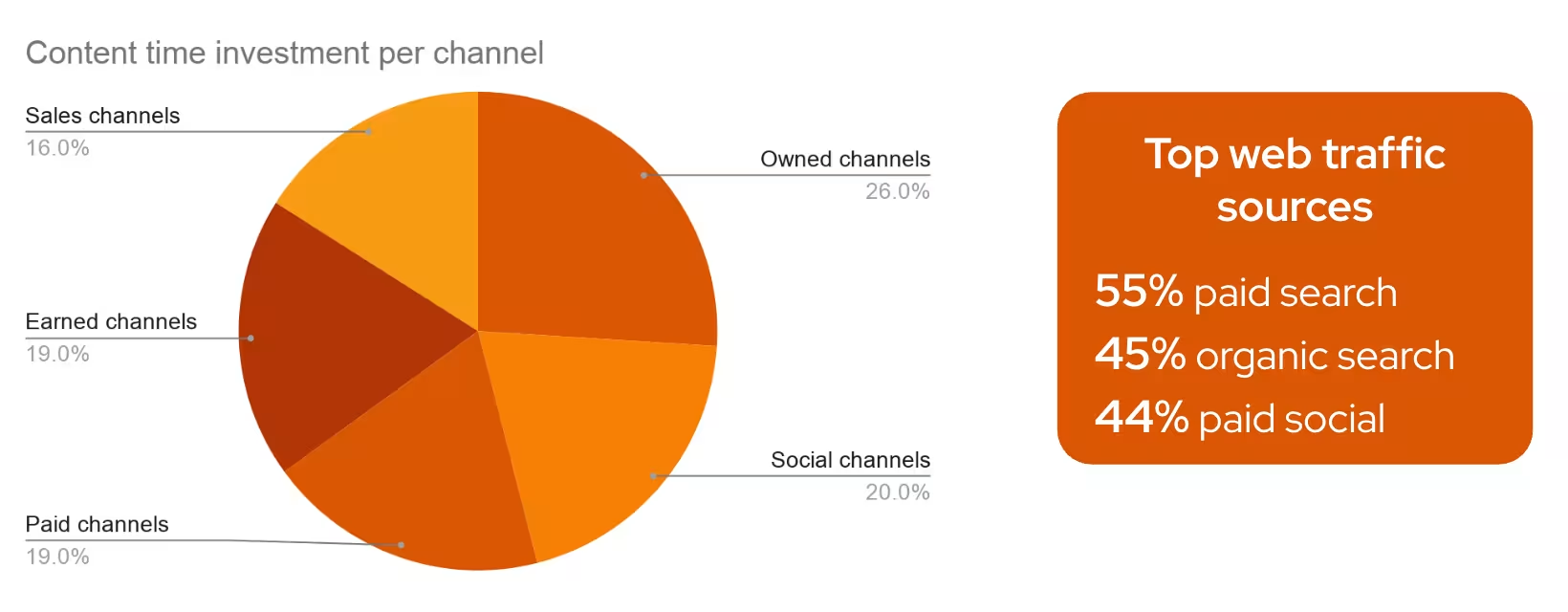
High-performing teams plan distribution earlier. They think about where the audience already spends time, how the message should adapt by channel, how paid and organic efforts can work together, and how long the content should stay in the market.
This requires a shift in how content teams think about ownership. Distribution should be part of the editorial strategy because the way an idea travels affects how it is understood. A research report might become a webinar, executive LinkedIn posts, short-form videos, sales talking points, nurture emails, event content, and paid social creative. Each version needs to preserve the core idea while adapting to the expectations of the channel.
That work also helps teams get more value from fewer, stronger assets.
Omar was clear about the stakes: “The winners were better at distributing their content. They had more brand partnerships. They were present on more channels. They were putting more paid behind their distribution.”
He also cautioned that many teams overestimate how much of their audience sees a piece of content at launch.
“Less than one to two percent of your audience is viewing it at launch,” Omar said. “You have to keep reaching them again and again.”
AI can help accelerate this work by creating derivatives, drafts, summaries, and channel-specific variations. The strategy still needs human judgment. Content marketers bring the editorial lens: what the story is, why it matters, how to preserve quality, and how to avoid flattening a strong idea into generic promotional copy.
The best distribution strategies are collaborative. Content teams bring the story. Demand generation teams bring channel expertise, targeting, and performance insight. Web, sales, partner, and brand teams help shape the experience around the asset. When those teams align earlier, content has a better chance of reaching the audience it was built to serve.
Differentiation means serving the moments that matter
Differentiation is often discussed as a brand idea, but it has very practical implications for content strategy.
The first is journey coverage.
Many content programs still lean heavily toward awareness. That makes sense. Awareness content often gives teams more room for thought leadership, storytelling, and broad engagement. However, buyers do not move through a neat, predictable path. They may enter with urgency, skepticism, technical questions, budget concerns, or a need to justify a decision to others.
A content strategy weighted too heavily toward the top of the funnel leaves many of those moments unsupported.
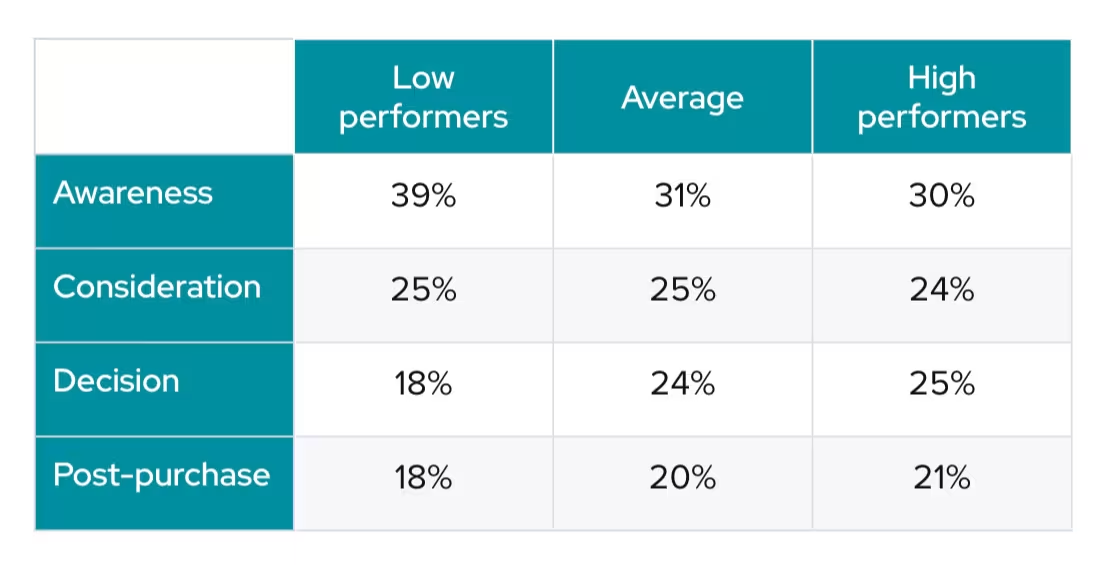
In the webinar, Omar shared that lower-performing teams tend to over-index on awareness content, while higher-performing teams invest more evenly across consideration, decision, and post-purchase stages.
“The difference between low performers and high performers is that low performers are over-indexing at the top of the funnel,” Omar said. “High performers have figured out that while they are still doing awareness content, they are also doing a ton of content down at the bottom stages.”
That does not require treating the funnel as a perfect model of buyer behavior. It does require giving each piece of content a clear purpose. What should the audience understand after engaging with it? What concern should it address? What decision should it support? What value should it deliver to customers after purchase?
Omar offered a useful reframing here, too. If the funnel feels too rigid, think of the journey more like a map: buyers may enter at different points, but they still need the right information available when they arrive.
This is where content becomes more intentional. The goal is stronger coverage across the journey, with assets designed around the moments where buyers and customers need clarity.
AI raises the bar for originality
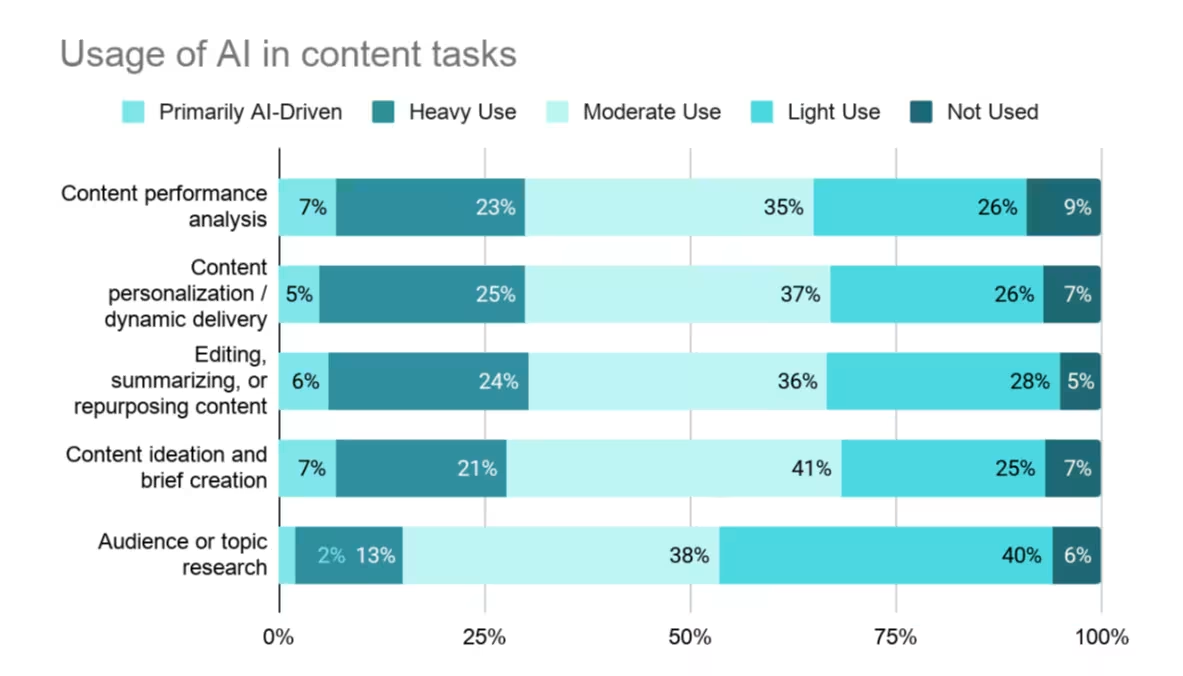
The second part of differentiation is the content itself.
AI has made it easier to produce, summarize, reformat, and repurpose content. Those use cases are valuable. They can help teams move faster and reduce tedious work, from metadata and tagging to alt text drafts, briefs, and derivative assets.
But AI also increases the risk of sameness. When many teams use similar tools on similar prompts with similar inputs, the output can start to converge.
That makes original thinking more important.
Omar noted that more mature teams are looking beyond AI-assisted generation. They are applying AI to content analysis, ideation, personalization, automation, and workflow efficiency. In other words, they are using AI to improve the strategy and operating model around content, not only the production process.
“It’s really clear that companies that are less mature are still stuck in the AI-for-content-generation phase,” Omar said. “The more mature companies are looking to see what else AI can do.”
That is where the opportunity becomes more meaningful. AI can help identify content gaps, analyze audience patterns, surface trends, scale personalization, and turn one substantial idea into a fuller distribution system.
As Omar put it, “AI is really good at recognizing white space or coming up with opportunities for you to play in. It’s good at looking at audience data and trends to see what kind of content you should be doing.”
The idea still needs to be worth scaling.
The content most likely to stand out will come from proprietary research, expert perspectives, customer insight, original data, and a clear point of view. It will be specific to the brand creating it. It will sound like it came from people with real experience, judgment, and conviction.
In an AI-saturated environment, content that only your brand could create becomes more valuable.

The content role is becoming more strategic
These shifts point to a broader change in the content marketing role.
Writing still matters. Editorial judgment still matters. Storytelling absolutely still matters. But the strongest content marketers are expanding beyond production into a fuller strategic role.
They are creative enough to develop distinctive ideas. They are analytical enough to understand performance and defend investment. They are fluent enough in AI to improve workflows and scale strong work responsibly. They are collaborative enough to connect content strategy with demand generation, sales, product marketing, web, brand, and customer teams.
At Contentful, we often describe this evolution as the rise of the full-stack marketer.
That kind of marketer can connect the idea, the system, the audience, the measurement, and the business outcome. They are not defined only by what they ship. They are valued for how they help the business learn, reach, convert, and retain the right audiences.
Omar’s closing advice to marketing leaders captured the shift well: “Show up where people are. Look for ways to make your content live beyond just your website. And create content that is worth paying attention to.”
An opportunity for content leaders
Content teams are entering a more demanding era. AI will keep accelerating production. Buyer journeys will keep becoming more fragmented. Channels will keep shifting. Internal expectations for measurable impact will keep rising.
The teams best positioned for this moment are the ones changing how they think about content strategy. They are building measurement practices that make their work defensible. They are treating distribution as a core part of the strategy. They are creating differentiated content that serves the full journey and reflects a point of view their brand can credibly own.
That is a harder mandate than simply producing more. It is also a more valuable one.
For content leaders, the opportunity is to use this moment to raise the strategic role of content across the business and build experiences that are more relevant, useful, and distinctive for the people they need to reach.
Check out the on-demand recording of my conversation with Omar to learn more.
And for more information about how Contentful can help your organization to create, manage, and deliver content across channels, get in touch with our team.

Inspiration for your inbox
Subscribe and stay up-to-date on best practices for delivering modern digital experiences.
Meet the authors

An experienced marketing leader with a passion for storytelling, Anne leads a full-funnel content marketing team. She excels at creating and implementing omni-channel strategies – including SEO, social media, video, and events – to drive engagement and nurture customer relationships.
Related articles
SAP Commerce storefront sunset: What it means for your content management
May 12, 2026
Are traditional CMS platforms holding back your brand?
March 11, 2025

From data to insight: The growing role of AI in analytics
May 8, 2026

Ready to start building?
Put everything you learned into action. Create and publish your content with Contentful — no credit card required.