From static to responsive: Unlock dynamic content personalization
Published on April 7, 2026


Inspiration for your inbox
Subscribe and stay up-to-date on best practices for delivering modern digital experiences.
Over 70% of customers expect brands to create personalized content experiences for them when they engage online. And over 75% become frustrated when that doesn’t happen. Personalization helps brands give customers what they want, increase conversion rates, and strengthen relationships that translate to repeat business.
Which is to say, if you’re serious about content marketing, personalization isn’t optional.
But not all personalization has the same impact on audiences. In 2026, personalization expectations go beyond the “Hello INSERT NAME HERE,” bare minimum strategies of the past. Customers expect tailored content that precisely targets their preferences, however and whenever they choose to engage.
Keeping up with that demand isn’t just a question of adding more content, or recruiting more customer data to target experiences. It means rebuilding the way content is structured and delivered so that experiences can respond in real time, and so that relevance actually becomes an objective growth metric, rather than a marketing aspiration.
More specifically, it means understanding and implementing dynamic content personalization as part of your digital marketing strategy.
What is dynamic content personalization?
Personalization is the process of tailoring shopping experiences to the needs and preferences of individual customers in order to increase engagement, customer loyalty, and conversions.
In a digital marketing context, it’s about feeding data into a rules-based personalization engine in order to shape content experiences. It’s the email that uses the customer’s first name; it’s the birthday discount; personalized subject lines on emails, loyalty-based promotions, and product recommendations based on past purchases. Essentially, it’s a process of augmenting the content experience to increase its specific appeal to a given customer.
How does dynamic content change things?
Dynamic content personalization deepens the specificity of that appeal by adapting content to the user’s experience during their active online engagement with a brand.
Dynamic content personalization utilizes established personal data (name, age, residential address, etc.) to personalize a user’s experience, but it also leverages emergent user data to continually optimize the experience for specific outcomes in real time.
That data might include pages the user clicked on after landing on the website, videos they watched (and the length of time they spent watching), images they enlarged, items in their basket, their IP address, the device they’re using, and so on.
Dynamic personalization vs. static personalization
The notion of adapting the experience as the user browses is critical here. Non-dynamic personalization — static personalization — leverages fixed data points, to deliver a fixed (static) experience based on that information.
In these static experiences, the user receives the same landing page greeting, the same message, the same recommended products, the same discount offers, and so on, regardless of how they interact. While those experiences can be tailored to the user’s history, they aren’t living elements of an experience that changes to help, guide, and support the user in the pursuit of their objectives.
Here’s a static personalization scenario.
A returning customer to a clothing website receives a “Welcome back, {FIRST NAME}” message when they arrive on the homepage. Below that, they see the full range of product categories, along with a selection of current promotional offers. This experience remains the same every time they visit and mirrors what any other returning customer sees.
In a dynamically personalized website, the experience is different — almost every time.
The customer might get the same “Welcome back” message, but then see a pop-up with a “10% discount for returning customers” offer. They might then see a list of recommended products based on their IP address or the time of year: “winter coats” during winter, for example, and “swimming shorts” during summer. If they browse “winter coats” extensively during their session, they might start seeing dynamic content recommendations for “winter hats.” If they added an item to their cart and then continued browsing, the website might send a nudge to prompt a purchase.
Aligning with user intent
But dynamic content personalization is more than an exercise in swapping components in and out of customer journeys. It reshapes the experience based on inferred intent. As users interact with a site or an app, their journey evolves continually in response to signals such as navigation patterns, content depth, and engagement behavior.
For example, a visitor who spends time exploring a brand’s enterprise features might see enterprise case studies and high-touch call-to-action (CTA) buttons rise to prominence as part of their ongoing experience. Similarly, a user that browses educational content might be guided towards deeper informative resources, rather than sales prompts.
Why does dynamic personalization matter?
Traditional, static personalization uses historical data like past purchases, age, location, or browsing history. These are useful, but they can only tell you who the customer was, not what they are doing right now.
Dynamic content personalization addresses this blindspot by adapting and responding to real-time browsing behavior and intent, using the freshest possible data to shape the experience more precisely. Rather than serving up isolated personalization elements, dynamic personalization curates the experience in the moment, in alignment with what the user is trying to accomplish more precisely, and, in doing so, increasing the value of personalization.
Because the best time to deliver a targeted, curated experience to a user is at the very moment when they are trying to accomplish their objective.
Think about it: Convincing a user to return to your site, after they’ve left, so that they can see your now perfectly intent-aligned CTA, is always going to be more difficult than presenting that CTA to them, as they browse.
Who needs dynamic content personalization?
Dynamic content personalization may seem like a “nice to have” for smaller brands or those with limited product catalogs, but it’s a powerful differentiator for companies of any size.
For enterprise organizations with large customer bases, frequent campaign launches, and global digital ecosystems, the ability to personalize at scale is essential. It enables brands to connect individually with vast numbers of users while keeping the experience consistent and relevant across regions, channels, and even sessions.
If a customer left a website, for example, and later opened the brand’s app on their phone, they’d get the same kind of dynamic experience including, for example, a “You have items in your basket” notification to remind them of their previous browser session.
Beyond scaling advantages, dynamic content personalization also reduces operational burden. The automation of content personalization means that content teams — writers, editors, and marketers — can build and optimize experiences without depending on developers and engineers to help them get the work done.
That freedom increases workflow agility and accelerates time-to-market for content and campaigns while freeing technical teams to focus on more value-adding projects as part of their wider digital marketing efforts.
The what and when of dynamic personalization
Dynamic content personalization depends on two core factors: relevancy and immediacy — essentially, what content is shown and when it appears.
“What” is a data problem. Brands need access to unified customer data, including behavioral data from the ongoing session, and be able to connect that data to personalization logic. In practice, this requires eliminating data silos and implementing a content management stack capable of moving information efficiently across the front back ends. Ideally, your solution leans into application programming interfaces (APIs) to facilitate seamless data transfer.
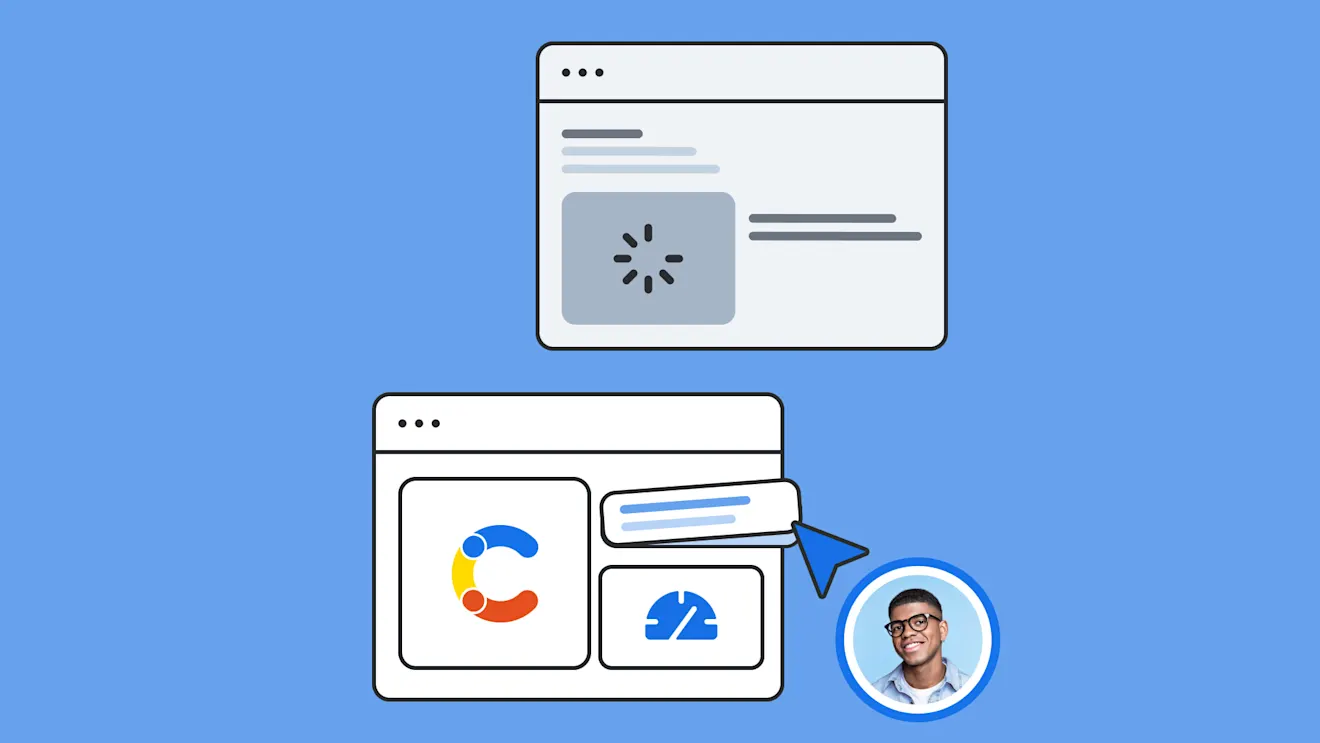
“When” is a timing problem. Dynamic personalization has to occur in real-time, which means content needs to be delivered in milliseconds, or at least fast enough that the user never notices a delay. When systems can’t deliver updates quickly enough, users may experience a visual “flicker,” where default content briefly appears before the personalized version flashes into place. This disrupts the experience and engagement.
Dealing with that real-time challenge means implementing a stack with low system latency that can ensure the speedy delivery of content to browsers and apps — so let’s talk about that.
How Contentful powers dynamic content personalization
Historically, achieving and delivering this degree of dynamism within the content journey has been difficult. Collecting real time signals introduces latency, while document object model (DOM) manipulation in the frontend introduces flicker (where a user catches a millisecond glimpse of the baseline content experience).
To solve these issues, we need a new form of data collection and delivery. The good news is, we have one.
Contentful supports the speed, flexibility, and scale required for dynamic content personalization. In fact, we offer a bespoke solution in the form of Contentful Personalization, which integrates that capability into the content workflow and empowers non-technical teams to personalize seamlessly and autonomously.
Here’s how:
Structured content modeling
Building structured content model within the Contentful Platform breaks content into modular components (headers, body text, images, CTAs, metadata, etc.). Structuring gives teams granular control of every aspect of their content, making it easy to personalize specific elements in a page, or entire experiences — from landing pages and product pages to blogs and reviews.
SDK-level segmentation
Contentful is an API-first platform and so enables speedy, seamless data and content flow across systems and channels. Our Experience API powers software development kit-level (SDK-level) personalization, which makes it possible for content teams to perform extremely fast audience segmentation — responding to user activity in real time in order to deliver highly targeted (and equally fast) personalized experiences.
AI automation
AI capabilities within Contentful reduce the manual effort required to deliver personalized experiences. Leveraging AI Actions, teams can reduce manual effort across the personalization workflow with automated content suggestions, audience segmentation, and localization. No need to jump between third-party tools, AI Actions enables teams to personalize entire journeys from within the Contentful Platform.
Analytics and insights
Contentful Analytics pulls critical data and insights directly into your content workflow. A customizable website analytics dashboard means your marketers never have to chase metrics across different tools, can gauge the performance of content in real-time, and make recommendations from the comfort of the UI. Even better, our agentic AI tools enable natural language prompts so that your team can extract deeper insight in seconds. And, if you still need a third-party tool for your workflow, the composability of the Contentful DXP means you can connect to all your other analytics and customer data solutions seamlessly.
Testing and experimentation
Contentful Personalization includes no-code A/B testing and experimentation tools that make it easy to test content hypotheses, compare audience responses, and validate which versions of content should be served to specific audience segments. Making testing and experimentation readily available means that content teams can optimize personalized experiences seamlessly.
Dynamic experiences with Contentful
Personalization isn’t a layer that you add to content if you have the time and resources. Audiences now expect it as a fundamental part of the content experience. Dynamic personalization is a way to deliver that — and then turn your content into a measurable growth engine.
Because when experiences respond to intent in real time, the impact on the user compounds: higher conversion rates, shorter buying cycles, more effective, paid campaigns, and, ultimately, stronger customer loyalty.
Dynamic personalization prevents content becoming a combination of digital assets that you publish and then hope perform. Instead, your content becomes a living ecosystem that you can continuously refine to drive better results.
Contentful builds that capability into your content strategy from the ground up.
Structured content enables teams to create modular experiences that can be tailored at scale. Real-time content delivery ensures frictionless deployment to the right audience, at the right time. Built-in experimentation and AI-powered insights make it easy to discover what’s working, and automatically amplify it.
The result? Assets that perform. Campaigns that convert. Journeys that move your users forward. More value from every interaction you have with your customers.
Ready for the next step? Take a tour of Contentful Personalization, watch the full range of AI Actions automation demos, or chat to our sales team to discuss your personalization journey.

Inspiration for your inbox
Subscribe and stay up-to-date on best practices for delivering modern digital experiences.
Meet the authors

Gabriel is GTM Lead, Personalization at Contentful. He helps partners and field organizations win by translating complex tech — data, AI, content, personalization — into GTM narratives that close deals.
Related articles

Enhancing Parkland’s marketing agility with composable architecture
July 3, 2025
AI governance: What it is and why it matters
February 19, 2026
Understanding and optimizing for various large language models (LLMs)
June 13, 2025