Small steps, big wins: Standing up a personalization program with Contentful
Published on May 28, 2026


Inspiration for your inbox
Subscribe and stay up-to-date on best practices for delivering modern digital experiences.
For successful marketers, personalization is no longer a nice-to-have. According to Contentful’s 2025 study in collaboration with Atlantic Insights, 37% of businesses now view personalization as one of the most important marketing skills, behind only data analysis and digital experience design.
But, at the same time, 32% cite it as a top challenge. Tailoring content to diverse, enterprise customer populations is no small feat: What experiences should be personalized? How should they be personalized? How deep should personalization go?
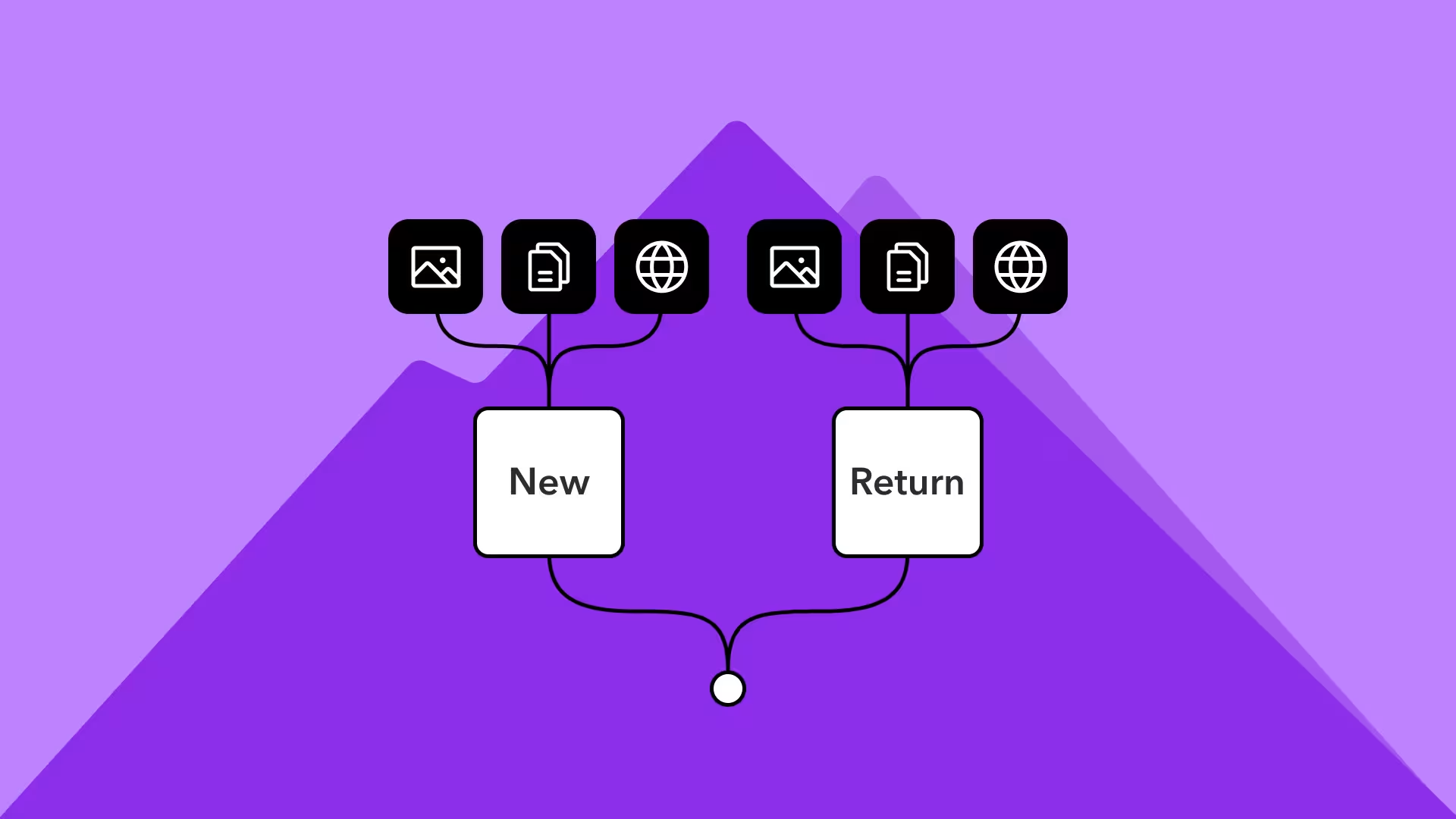
The prospect of defining your audiences, segments, behaviors, data sources, and metric tracking, not to mention designing personalized experiences throughout the entire funnel, can leave you feeling like you’re staring up at a mountain, wondering where to start.
Climbing the personalization mountain
Contentful’s Web Marketing Team was in that same place.
We’d mapped out the big-picture personalization plan for our website, but what we really wanted was to stand up our personalization program quickly and simply. Small steps that would not only deliver swift, meaningful wins but help build momentum over time — and do it all using the capabilities of the Contentful Digital Experience Platform (DXP).

First steps: Segmentation
We decided to kickstart our program with nimble use cases built on information that we already knew about our visitors, or that we could infer.
No need to capture data from additional sources, conduct data enrichment, or integrate complex third-party tools. We’d use a mixture of first-party data authorized and provided by our site visitors, and behavioral signals sent during their browsing sessions, as a basis for segmentation.
That approach enabled us to build a launchpad for personalization based on the following segments:
New vs. returning site visitors
Anonymous vs. known customers
And here’s what we did with them.
New vs. returning visitors
Our own analysis showed that first-time visitors to our homepage weren’t interacting with the “Contact sales” call to action (CTA) in the hero section as much as we would have liked. The CTA had a click-through rate (CTR) of 1.5%. That actually aligns with industry benchmarks — but we knew we could do better, so we decided to personalize the CTA experience.
Using behavioral personalization, we staggered the CTAs that visitors see, based on their new or returning status. On their first time on our site, visitors no longer get the “Contact sales” CTA immediately, but instead see messaging that encourages them to deepen their understanding of the platform and continue to explore.
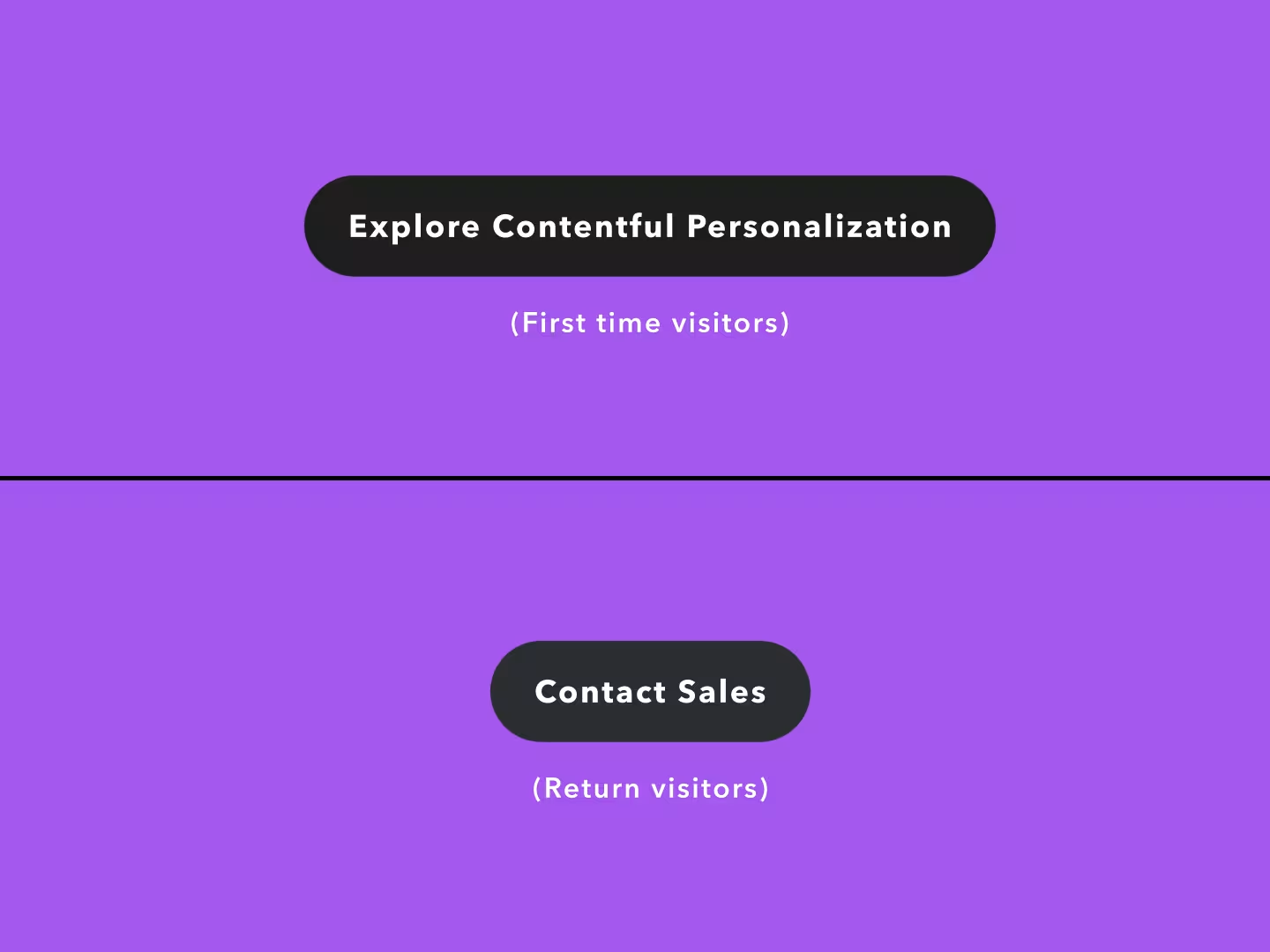
The “Contact sales” CTA now appears for users on subsequent visits.
Anonymous vs. known customers
We weren’t finished with the homepage. We believed existing customers could get further value from our products and services, and we knew we could optimize that outcome with the right content. However, we didn’t want to connect complex data systems to our program in order to identify known customers from other traffic — simplicity remained a priority.
But we did have behavioral information that could help us do that job. Our data showed that 30% of homepage traffic was clicking on the “Log in” button at the top right-hand corner of the page; we could comfortably categorize these visitors as “known customers.”
The problem was, we only had a matter of seconds (three to eight, if you want specifics) to capture their attention before they navigated to the button. These users are current customers, familiar with our homepage and our messaging, and likely to tune out marketing content: How could we stop them in their tracks?
We leaned into what we know about marketers: They typically have an excellent eye for detail. Now, when these customers arrive on the homepage, they see what they may well assume to be a typo: placeholder text in the hero banner.
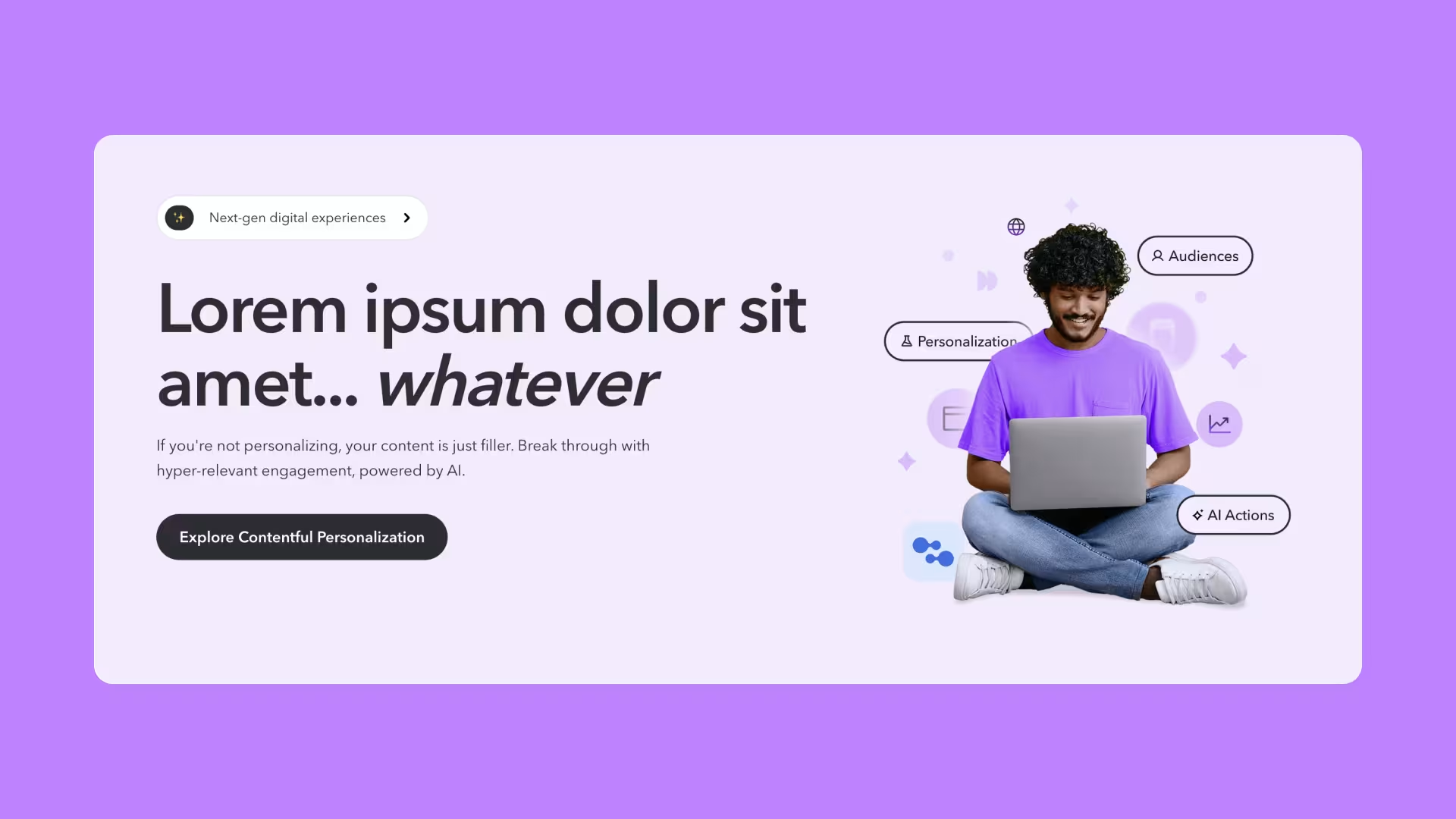
The idea was that the conspicuously generic “lorem ipsum” messaging would trigger alarm bells for most brand marketers. Upon seeing the “typo,” they’d be compelled to zero in on the hero banner text, engage with our messaging, and ultimately click through to deeper pages.
The personalization wasn’t just the words in the hero banner; we targeted the banner’s background color, the image, the testimonials, and other homepage elements. These were all small nudges that we could test and implement quickly and easily within the Contentful DXP, and that would collectively contribute to customer conversions.
The outcome
The subtle variation in CTA messaging and playful homepage “typo” strategies delivered pretty unambiguous results.
Click-through rate on the primary hero button jumped a staggering 195% for first-time visitors.
Click-through rate on the “Contact sales” CTA for returning visitors increased 37%, which delivered a 12% increase in marketing-qualified leads (MQLs), month-over-month.
First-time visitor traffic to deeper platform pages increased by 276% in the first week alone.
The lesson here is that effective personalization doesn’t have to begin with massive technical investment or involve end-to-end content variance.
What’s next?
We got our program up and running without piling extra work onto developers or chasing data across dashboards. We simply leveraged the built-in personalization capabilities of the Contentful DXP to support the cross-functional collaboration, experimentation, and creativity we needed — and got incredible results.
But our segmentation-based use cases are a single component in a wider, ongoing program. They’re a foundation we can build on to expand personalization across our ecosystem for new channels and audiences.
And you can do that too. If you’re ready to start your own personalization journey, reach out to our sales team to schedule a platform demo.

Inspiration for your inbox
Subscribe and stay up-to-date on best practices for delivering modern digital experiences.
Meet the authors

Casey leads content strategy and messaging across Contentful.com, partnering with cross-functional teams to create impactful digital experiences that drive engagement, support launches, and strengthen brand storytelling.
Related articles
Why you need a content repository (and how to get the most from it)
July 23, 2026
Value quantification and the art of the possible
August 4, 2026
34 customer experience statistics and insights you shouldn't ignore
January 15, 2025

Ready to start building?
Put everything you learned into action. Create and publish your content with Contentful — no credit card required.