Why marketing teams feel slower than ever (and what to do about it)
Published on June 24, 2026


Inspiration for your inbox
Subscribe and stay up-to-date on best practices for delivering modern digital experiences.
As someone who’s spent more than 25 years helping organizations design and deploy content management systems, I’ve noticed a pattern: Most marketing teams don’t wake up one day and realize their website has become a problem.
The slowdown builds slowly. An extra approval here. A developer dependency there. A simple content update that suddenly requires three teams and a dozen emails. Over time, teams adapt to the complexity instead of questioning it. That’s where the real problem begins.
Marketing teams are under pressure to move faster. They need to launch more campaigns, support more channels, localize content, test ideas, and create more personalized experiences. When execution slows down, it’s easy to assume the team needs more people or better processes.
Sometimes that’s true. But often, the deeper issue sits in the setup itself. The website and content operations that worked when the business was smaller can start to strain as the team takes on more content, more audiences, and more expectations.
In a recent webinar, I spoke with Justin Emond, Founder and CEO of Third and Grove, about why content work starts to feel harder as companies grow, how technical debt becomes a growth constraint, and what fast-moving teams are doing differently.

The slow boil of marketing friction
Operational drag rarely shows up as one dramatic failure. It shows up as small compromises that seem reasonable in the moment.
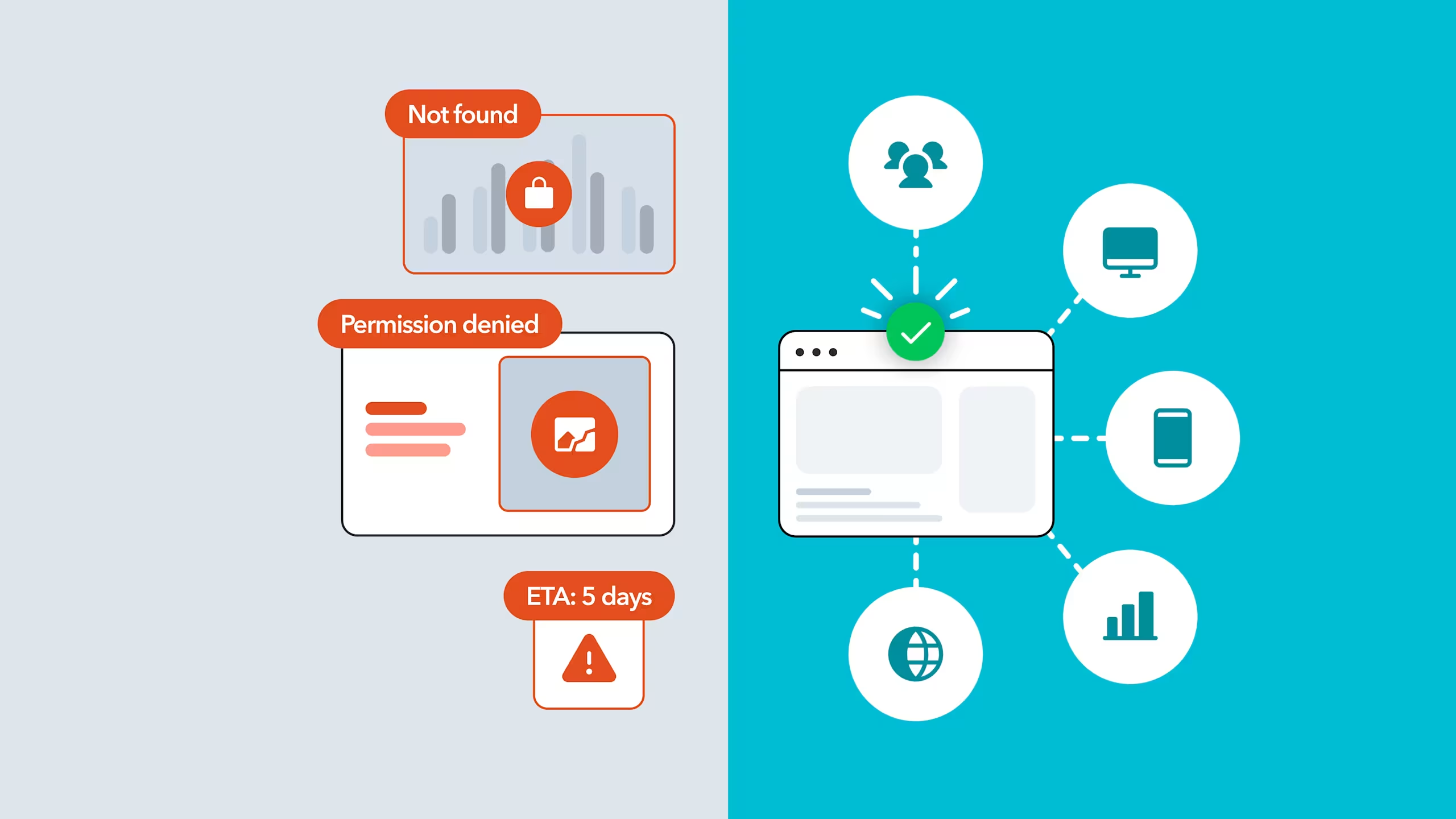
A campaign needs a landing page, but the template doesn’t quite work. A marketer needs to update messaging, but the content appears in multiple places. A developer has to step in for a basic change. A team starts using another tool because the main system feels too slow.
Each workaround helps the team meet a deadline. Over time, those workarounds become the way work gets done.
Justin compared technical debt to regular debt. “Debt doesn’t matter until it does,” he said, “and then it’s the biggest problem.”
That’s often how marketing friction works. One extra review, one manual fix, and one unique page at a time, the system starts shaping how the team works. Eventually, instead of your website supporting your marketing team, your marketing team is supporting the website.
Four signs your website is slowing you down
The first sign is developer dependency. Developers should help build and improve digital experiences, but they shouldn’t be required for every routine content update. When marketers need development support to change copy, update a landing page, or adjust a campaign experience, everyone loses focus.
Justin described this as one of the clearest warning signs: “Everything they want to do becomes a special snowflake.” In other words, routine requests start behaving like exceptions because the system doesn’t support repeatable work.
The second sign is one-off content. If every campaign page is rebuilt from scratch, teams create more work, more inconsistencies, and more places where content can become stale.
The third sign is content fragmentation. When the main content management system feels too slow, teams may publish in other tools just to get work live. That solves the immediate deadline, but it creates more systems to maintain later.
The fourth sign is update anxiety. If changing brand messaging, refreshing a page, or launching a campaign creates dread, that’s worth paying attention to. It usually means the setup no longer matches how the team needs to work.
The hidden business impact
These problems may feel internal at first, but they’re eventually felt by customers.
When teams spend too much time maintaining the basics, they have less time to improve the customer experience. Messaging gets harder to keep consistent. Pages get harder to update. Testing and personalization get pushed aside.
Justin shared an example of a large law firm where adding a simple campaign landing page triggered a long chain of coordination across marketing, IT, creative, and development. The site had more than 50 components, which created more complexity than the team needed. What may have looked like flexibility had become another layer of complexity.
That matters because every page on your website has a job. Some pages inform. Others drive conversion, support a product story, or move someone through a journey. If your team can’t easily update, test, and improve those pages, it gets harder for your content to do its job.
A slow workflow doesn’t only slow your team down. It can make your brand feel slower, less consistent, and less responsive to customers.
From one-off content to reusable content
The answer starts with better structure.
Fast-moving teams have content operations that support reuse, consistency, and autonomy. Instead of treating content as static pages, they manage content as reusable pieces that can be assembled, updated, and adapted across experiences.
Take a simple call-to-action update. In a manual setup, someone has to find where the content lives, which pages reference it, whether it appears in regional variations, and whether a developer is needed. A small wording change becomes a multi-team project.
In a more modular setup, that same content can be managed centrally and reused wherever it needs to appear. Teams can update it once, maintain consistency, and move faster without creating more manual work for the next campaign.
This also creates a stronger foundation for personalization, testing, and AI. During the webinar, Justin made an important point about artificial intelligence: “AI allows us to separate production from judgment.”
AI can help teams move faster, but without the right content foundation, it may only make legacy workflows slightly faster. The bigger opportunity is to rethink how the work should happen.
Your website should be a force multiplier
Content demands will continue to grow. Marketing teams will keep being asked to launch faster, personalize more, support more channels, and show measurable impact.
The teams that keep up will be the ones that step back and ask whether their current setup still matches the way they need to work.
If your website feels like something you have to support rather than something that supports you, it's time to rethink the foundation.
Justin summed it up best: “The website should not be a bottleneck. It should be a force multiplier.”
That’s the standard fast-moving teams are working toward.
To hear the full conversation, watch the on-demand webinar with Justin Emond and me on how mid-market teams can identify hidden content bottlenecks, rethink legacy workflows, and build a website foundation that helps marketing move faster.

Inspiration for your inbox
Subscribe and stay up-to-date on best practices for delivering modern digital experiences.
Meet the authors

Luke is a Solution Engineering Manager, leading teams of technical sales consultants who help organizations rethink how digital experiences and content actually get built, scaled, and sustained. Known for his work in CMS and systems architecture, he approaches complex digital challenges as systems problems rather than isolated tactics.
Related articles

Headless, decoupled, and Contentful: A non-technical explanation for the confused
November 20, 2024
Personalization maturity model: When and how should you personalize customer experience?
October 31, 2025

How to choose the right personalization tool for your business
May 9, 2025

Ready to start building?
Put everything you learned into action. Create and publish your content with Contentful — no credit card required.