AI is now shopping for people: What your business needs for agentic commerce
Published on September 10, 2026


Inspiration for your inbox
Subscribe and stay up-to-date on best practices for delivering modern digital experiences.
Agentic commerce is the new frontier in online shopping: Rather than manually searching for and comparing different products across different storefronts, users are setting their AI agents loose to do it for them. This isn't the future. AI agents are already shopping today, and products and services with the right website structure and technology are more likely to be discovered and chosen.
This guide explains the concepts and technologies that make agentic commerce work and what you need to do to prepare your ecommerce systems and product catalogs for AI.
What is agentic commerce?
AI agents take AI from a simple chat interface (ask a question and wait for an answer) to an autonomous system that can act independently according to user instructions or a set goal.
This has led to agentic commerce: users asking AI agents to find, compare, recommend, purchase, and pay for products from online stores. While agents can technically browse any online store, different website layouts, structures, and other factors can make this difficult for them. To fix this issue, brands are enriching their websites with specific product discoverability, product comparison, checkout, and payment systems for AI agents to use.
Agentic commerce is more than just AI-assisted shopping and recommendation engines, where the website provides a chat interface with an AI assistant that offers information or suggestions. In agentic commerce, the customer — not the seller — is in charge of an AI agent and sets its goals, sending it to interact on their behalf (potentially with another AI agent on the business side).
Customers do not give up control in agentic commerce workflows. You can instruct an agent to seek confirmation before taking action, like checking with you before substituting an out-of-stock item or before committing to a purchase. The level of automation is determined by the instructions given. Businesses may similarly enforce a review stage for things like stock or fraud checks before their agents confirm an order.
How agentic commerce benefits your business and your customers
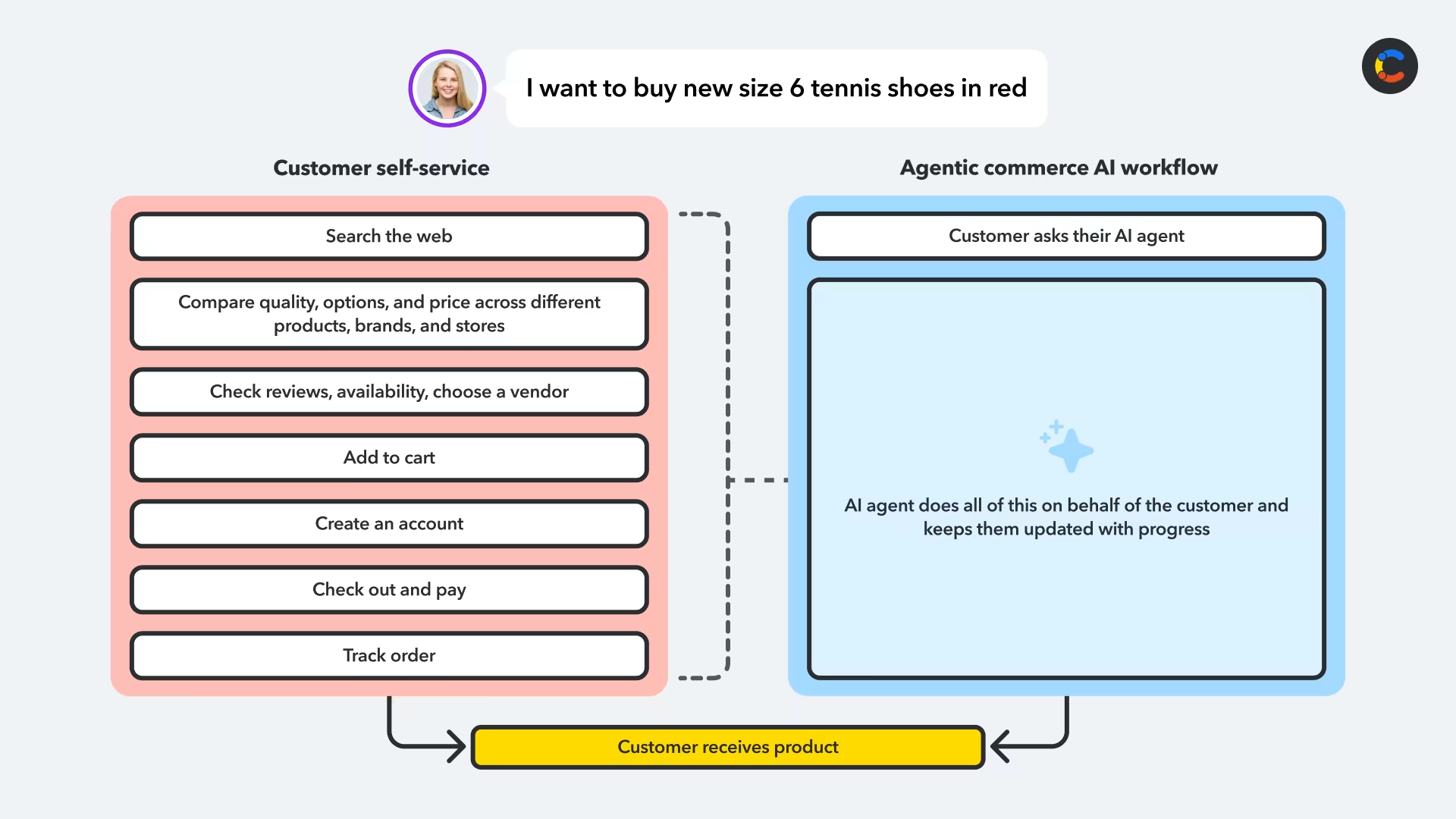
Finding a product that does what you want at a price you're happy with can be time consuming. Agentic commerce relieves customers of the often laborious (and unwanted) process of searching for products, comparing specs, reading reviews, and then checking whether it is available at a lower price, with faster shipping, or with better warranty terms or buyer protections.
Because AI agents can operate autonomously 24 hours a day, customers can also leave them to watch for deals and sales and make the purchase when a product is discounted.
Agentic AI assistants can be more thorough, comparing more websites than a person could to ensure the right product is found and, most importantly, operating in the users' interest. While businesses can integrate helpful AI-powered shopping assistants in their shops, these will not recommend potentially better deals from competitors, for obvious reasons.
For example, you might task an AI agent with finding, comparing, and purchasing a new phone for you. It can compare features, prices, and other variables and present you with its final selection for confirmation (or, for more predictable, less expensive purchases like weekly shopping, authorize it to check out and pay for you).
Agentic commerce isn't just for retail transactions. It will continue to see increasing adoption in travel, hospitality, digital products, subscriptions, B2B procurement, and supply chains.
Businesses benefit by being able to serve these customers and offer new discovery channels that their competitors may not. Agentic commerce also offers a high level of automation. Agentic AI shoppers that have ready access to information don't need to ask questions. In some cases, their convenience will encourage purchases, provided they have access to the information they need in a structured format.
For B2B, AI agents for both parties could negotiate price and conditions, streamlining procurement workflows and helping progress transactions in real time across timezones.
The rapid adoption and future potential of agentic commerce is reflected in McKinsey & Company research data, which suggests there will be up to USD 5 trillion in global revenue from agentic commerce in the B2C market by 2030.
How agentic agents find your products on the internet
There are three primary architectures for agentic commerce:
Agent to site: Customers' AI agents browse your website and shop on their behalf.
Agent to agent: Customers' AI agents talk to your business's own AI agents that help them discover products and negotiate transactions. Business agents may be provided by platforms like Google Agentspace or Microsoft Copilot Studio or supplied by dedicated procurement-agent vendors.
Brokered agent to site: An intermediary AI platform helps customers with multi-agent and multi-site transactions. For example, the customer may ask Google Gemini to find and compare products, but they are not directly using an agent.
The key concept that all of these require is discoverability. Agents must be able to discover products by searching for them online. Once found, they need to gather details so that they can filter products down to the customers' requirements and accurately compare different products and brands.
The decision-making that customers delegate to AI agents requires information. If your product cannot be found or the relevant attributes cannot be parsed by the AI agent, it may not make it to the comparison or purchase stage. This is also important for answer engine optimization (AEO) and making your brand visible in AI search results.
Discoverability and comparison require a structured, centralized source of truth that informs both human and AI-facing storefronts. When a person browses your online store, you employ UX designers to make sure that it's clear that a pair of shoes comes in different colors, as well as which ones are in stock. AI needs the same information in a format and with context that it clearly understands.
The agentic commerce technologies your business needs for AI shoppers
Model Context Protocol (MCP) is an open standard for connecting AI agents with external tools, systems, and data. In ecommerce, businesses can use MCP to expose product catalogs, search capabilities, policies, carts, and other shopfront functions through machine-readable interfaces. MCP provides the connection layer, while commerce protocols such as Universal Commerce Protocol (UCP) and Agentic Commerce Protocol (ACP) define product discovery, checkout, identity, and payment workflows.
The implementation approach depends on your ecommerce architecture. Shopify provides native MCP-based capabilities for storefronts, product catalogs, carts, and checkout. Businesses with bespoke commerce or order management systems can build MCP servers using available SDKs and expose carefully governed tools for catalog search, product details, inventory, orders, or other supported workflows.
Even if you're not ready to start letting AI agents make purchases and payments, simply having your catalog be discoverable to them ensures customers are exposed to your brand. A machine-readable catalog gives AI agents a clear path to understand and surface your products. It creates an opportunity for your brand to appear in agent-led shopping journeys, with visibility shaped by the agent, platform, data quality, permissions, and customer intent.
At the checkout and payment layer, commerce platforms and payment providers are supporting a growing set of protocols. Shopify uses UCP-based catalog and checkout capabilities, Stripe supports ACP and UCP for agentic commerce alongside Machine Payments Protocol (MPP) and x402 for machine payments, and Visa provides trusted-agent and payment infrastructure through Visa Intelligent Commerce.
Because the ecosystem is evolving rapidly, businesses should start with the protocols and integrations their commerce platform natively supports while keeping their architecture modular and portable. Agents can work across different tools and protocols, but successful interoperability still depends on headless implementations, clear permissions, reliable product data, and secure payment controls.
Successful online businesses need structured data and long-term insights
The Contentful content platform integrates with ecommerce platforms, including Shopify, commerce tools, and SAP, to create a composable commerce solution. Integrate with almost any system using integrations, REST, and GraphQL APIs to create an independent, structured, central source of truth to store your product data that multiple ecommerce or order management platforms can read.
This makes your products discoverable and consistent, no matter what kind of user is browsing, and lets you leverage the agentic commerce features for checkout and payment offered by your preferred ecommerce platform.
This not only assists agentic commerce discoverability but helps protect against losing control of your brand and customer experience. You remain in control of your product catalog and avoid vendor lock-in with any one ecommerce platform. You can share product data across multiple ecommerce platforms and apps that serve different regions, support different technologies, or serve different kinds of customers or sales channels.
You can also use product data, including text, images, and video, to create targeted ads and store structured metadata that ensures your catalog is well organized and future-proof for new use cases. For example, customer support AI agents could be connected to your catalog so that they are aware of product details when helping customers.
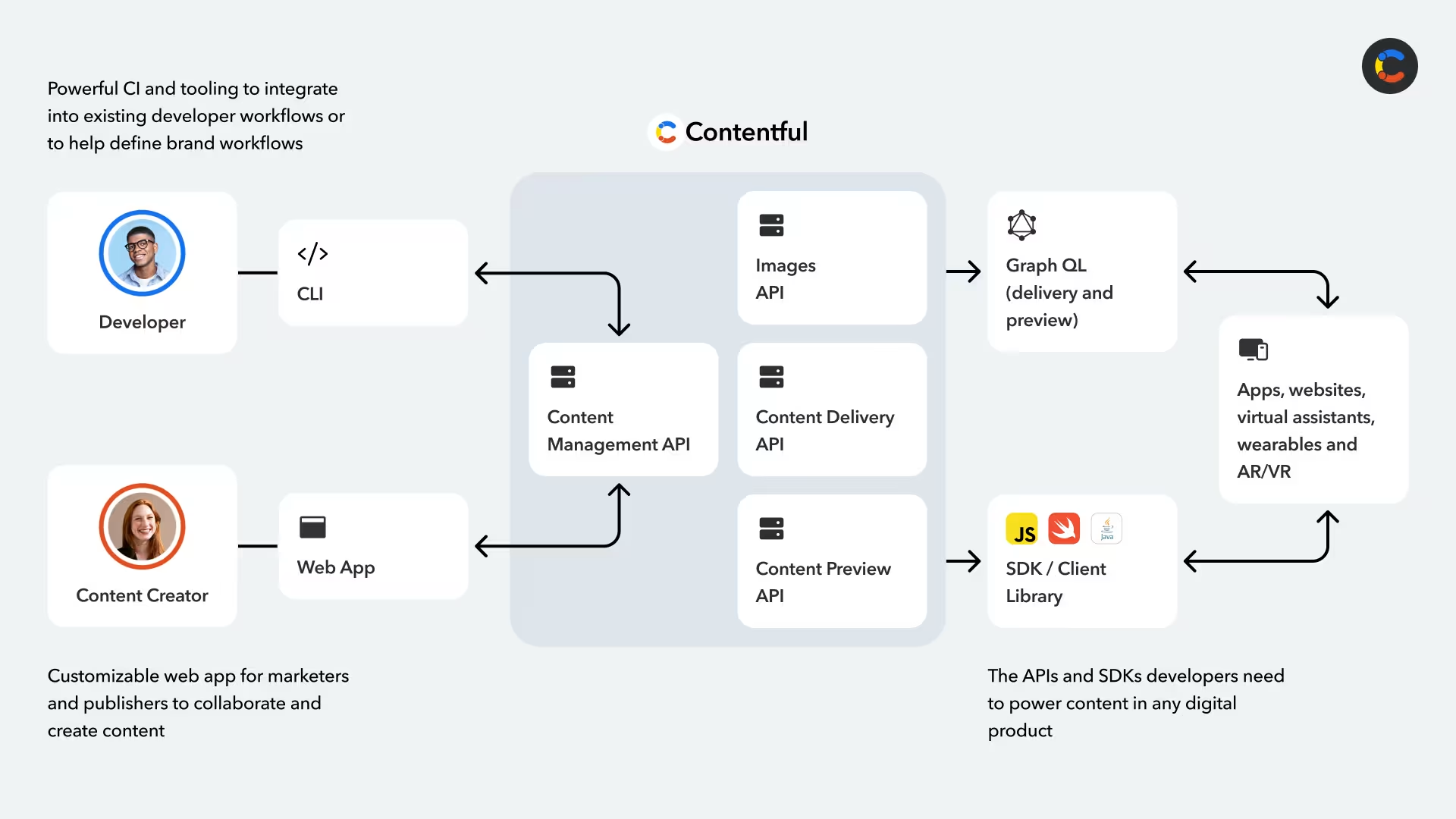
Contentful includes collaborative tools that enhance creative and marketing workflows with AI automation, as well as AI-enhanced analytics that help you understand how effective your content is at reaching and converting your audience. Your product data is versioned, so you can run experiments and see how to best help your customers and their agents find and purchase your products.
Find out how Contentful enables your business's long-term strategies, readies you for agentic commerce and other emerging technologies, and helps you realize the long-term value of your data.

Inspiration for your inbox
Subscribe and stay up-to-date on best practices for delivering modern digital experiences.
Meet the authors

Neha Khawas is a Principal Solution Engineer at Contentful. She partners with enterprise brands to enable teams building digital products for the modern, personalized, omnichannel world. With over a decade of experience in technical sales and content management, she helps customers navigate their digital transformation journey.
Related articles

Common barriers to account-based marketing personalization (and how to overcome them)
June 2, 2025

6 exciting customer experience (CX) trends to watch
February 26, 2025

How to choose the right personalization tool for your business
May 9, 2025

Ready to start building?
Put everything you learned into action. Create and publish your content with Contentful — no credit card required.